Printable Outdoor Checklist for Preschool Nature Play
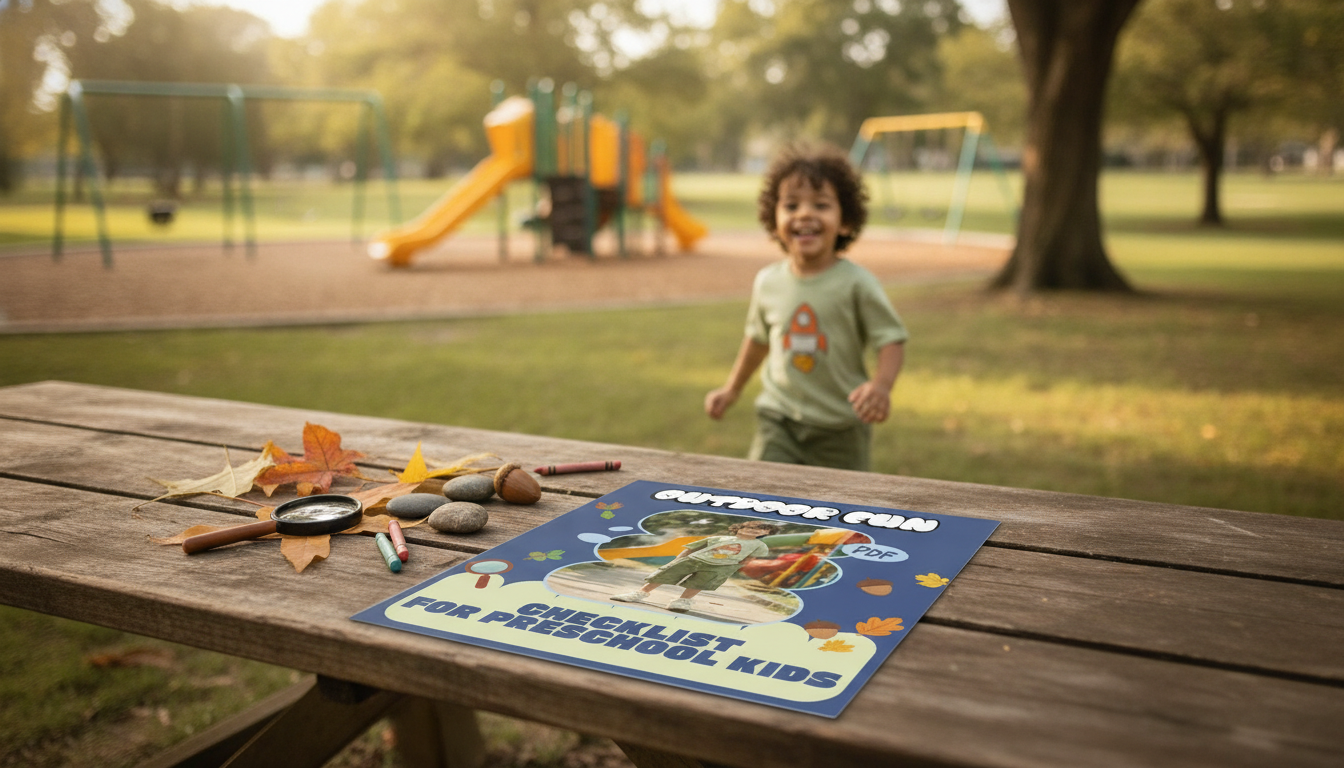
Outdoor Fun Checklist for Preschool Kids: Nature Play, Active Learning, and Mindful Moments
Outdoor time can be simple, purposeful, and low-prep when there’s a clear menu of ideas to choose from. A printable checklist helps preschoolers build independence, gives caregivers an easy plan for varied play, and supports skills like observation, movement, and calm-down routines—without needing special equipment.
What a Preschool Outdoor Checklist Helps With
- Reduces “what should we do now?” moments by offering ready-to-go activity prompts
- Encourages balanced outdoor time: big-body movement, quiet noticing, creative play, and simple science
- Builds early executive skills (choosing, completing, reflecting) through checking off tasks
- Supports screen-free routines after preschool, on weekends, and during travel or family gatherings
- Makes it easier to repeat favorites while still rotating in new ideas
Outdoor play supports healthy development and daily movement habits, and it doesn’t have to be complicated to be meaningful. For background on why active play matters, see the CDC guidance on children’s physical activity and the American Academy of Pediatrics statement on play.
How to Use a Printable Outdoor Activities Guide
- Pick 5–10 options for one outing to keep the plan short and achievable
- Offer choice: let the child select the first activity and alternate turns choosing
- Use a timer only when needed (for transitions), not as a constant pressure tool
- Add a quick “notice” prompt at the end (one thing seen, heard, felt, or smelled)
- Celebrate completion lightly—checking off is the reward, not a high-stakes goal
One easy rhythm: start with movement (burn energy), shift to a build/creative option (focus), then do a short noticing activity (curiosity), and finish with a quick reset (calm). If you’d like a ready-to-print version that’s easy to reuse, Outdoor Fun Checklist for Preschool Kids – Printable Outdoor Activities Guide keeps those categories together so it’s simple to pivot mid-outing.
Nature Play Ideas That Work Almost Anywhere
- Neighborhood nature hunt: find something rough, smooth, tiny, and tall
- Collect-and-sort: group leaves, stones, or sticks by size, color, or texture
- Cloud watching: describe shapes and movement; try “slow breathing with clouds”
- Mini habitat look: carefully observe ants, worms, or birds from a respectful distance
- Build-and-balance: stack rocks, make a stick line, or create a “fairy path” with found items
- Listening walk: pause for 10 seconds and name as many sounds as possible
These activities travel well because they rely on what’s already around: sidewalks, patches of grass, a few trees, or a small playground border. If you’re visiting a new place, start with a “ground rule” that matches the setting (for example, “we stay where we can see the bench”). For more on outdoor play benefits, the NAEYC overview of outdoor play offers helpful perspective for families and educators.
Active Learning Outdoors: Movement + Early Skills
- Counting hops: hop to 10, then backwards, then in “silly patterns” (2 hops + 1 clap)
- Color and shape jumps: jump to something red, then something round, then something striped
- Throwing practice: toss pinecones or soft balls into a bucket from different distances
- Obstacle path: step over a stick, crawl under a bench, tiptoe along a line
- Letter and sound spotting: find letters on signs; match sounds (B for bird, S for swing)
- Simple measuring: compare which stick is longer; pace out distances with big steps
Keep the “learning” light by letting the child lead the intensity. If they want to repeat the obstacle path five times, that repetition is building coordination, confidence, and stamina. If they’re losing interest, switch to a short challenge: “Can you do three tiptoe steps to the shadow?”
Mindfulness for Young Children Outside
Quick Safety and Comfort Checklist
Activity Mix for a Balanced Outdoor Day
Sample mix-and-match plan (choose 1 from each column)
| Big Movement | Creative/Build | Nature Notice | Mindful Reset |
|---|---|---|---|
| Obstacle path (step/crawl/tiptoe) | Stick shapes or rock stacking | Listening walk (name 3 sounds) | Bubble breathing (3 slow breaths) |
| Counting hops (to 10) | Sidewalk chalk “roads” | Cloud spotting (describe 2 shapes) | 5-4-3-2-1 senses (short version) |
| Toss into a bucket (near/far) | Leaf rubbings (if available) | Find something rough/smooth | Rock fists → leaf hands (3 times) |
Printing and Setup Tips for Real-Life Use
If outdoor plans include car rides (park hops, weekend trips, family gatherings), pairing a play checklist with a comfort plan can help the day run smoother. For families who deal with queasy riders, No-Nausea Ride: The Ultimate Digital Guide to Beating Motion Sickness on the Road is a practical companion resource for travel days.
Printable Resource Option
Explore the printable here: Outdoor Fun Checklist for Preschool Kids – Printable Outdoor Activities Guide.
FAQ
How long should preschoolers play outside each day?
Many families aim for at least 60 minutes of active play daily, and outdoor time can be split into shorter sessions (like 15–30 minutes) to fit real schedules. Consistency matters more than a perfect number, so a daily routine after preschool or before dinner works well.
What are easy outdoor activities when space is limited?
Try sidewalk chalk, a mini scavenger hunt (rough/smooth, loud/quiet), balancing along a line, tossing into a bucket, or a short listening walk on the sidewalk. For apartments, use courtyards, building walkways, or a nearby patch of green for quick “notice” and “move” activities.
How can mindfulness be introduced outdoors without making it feel like a lesson?
Keep it playful and brief—three “bubble breaths,” a quick senses game, or “rock fists to leaf hands” during transitions. Offer it as an option when emotions run high, and let the child decide whether to join in.











Leave a comment