Step Out in Style with Elegance and Comfort
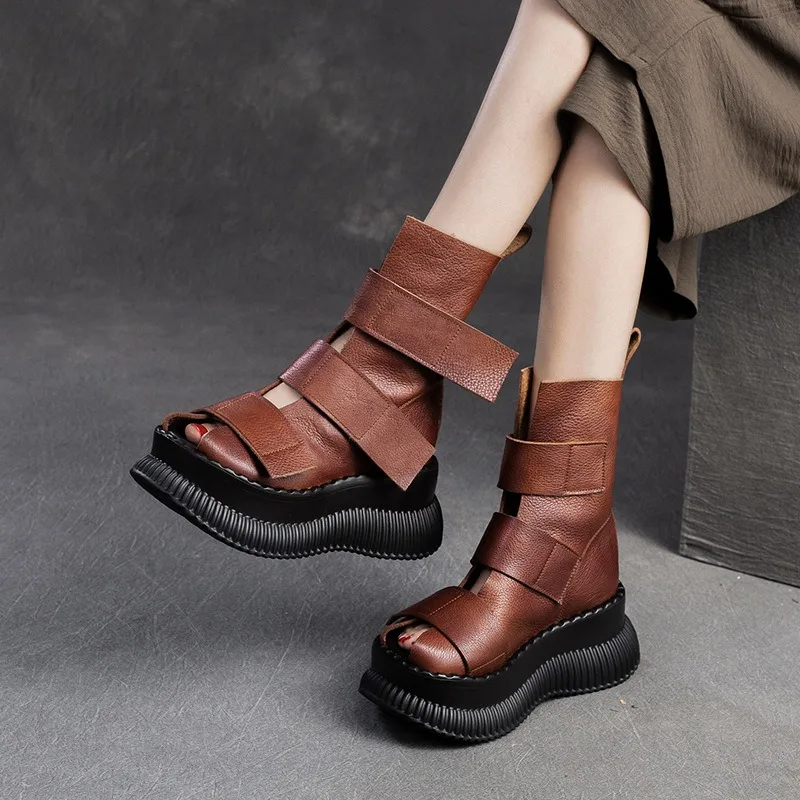
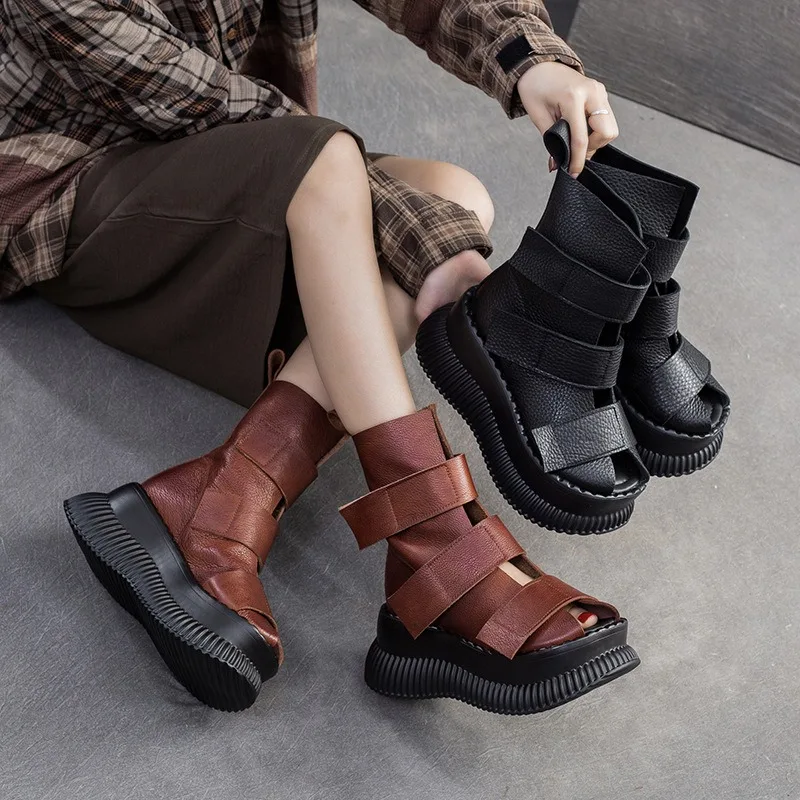
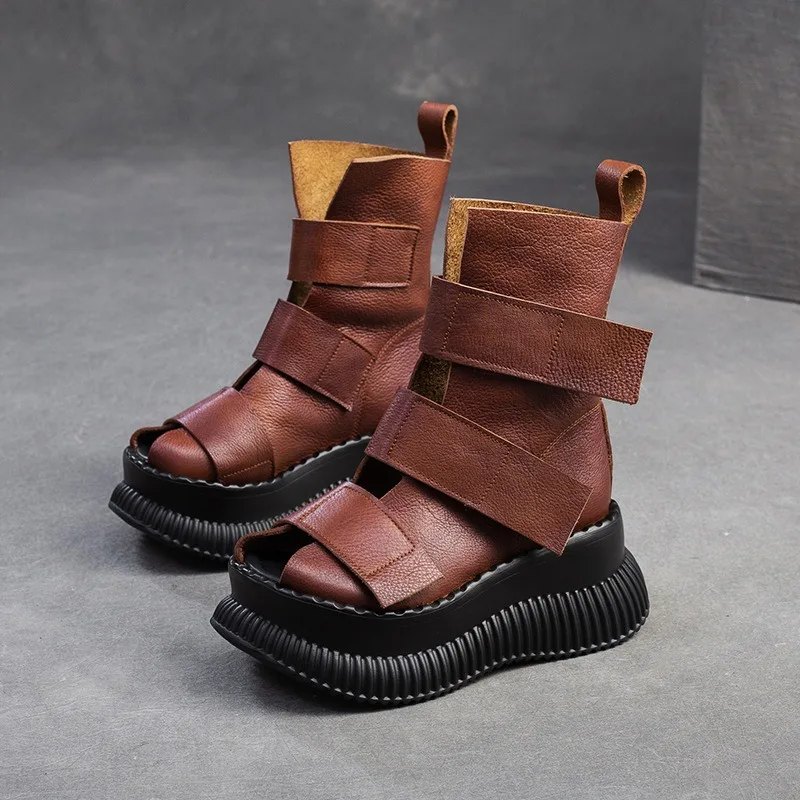
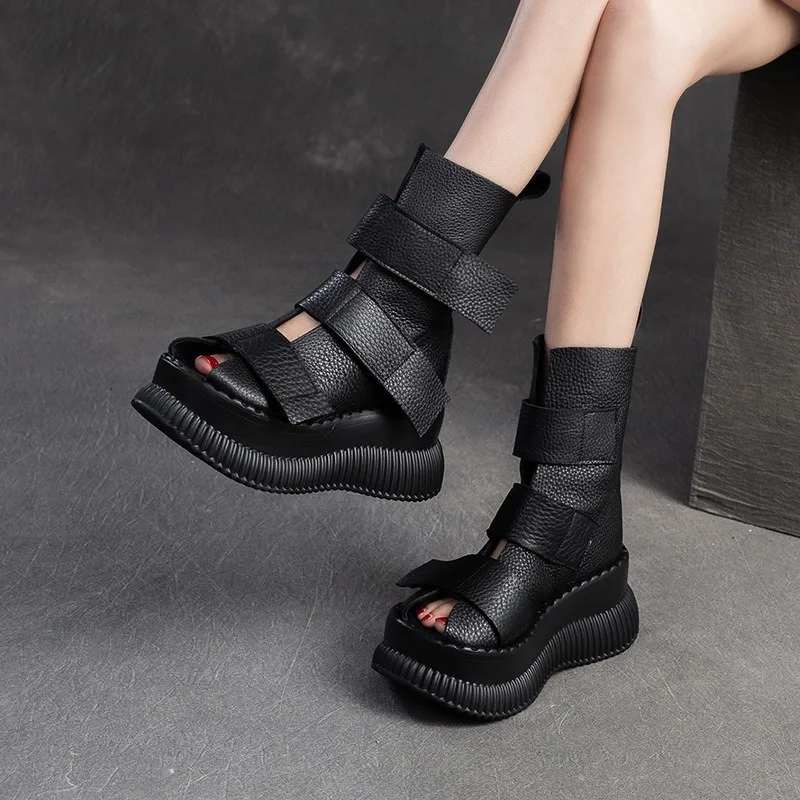
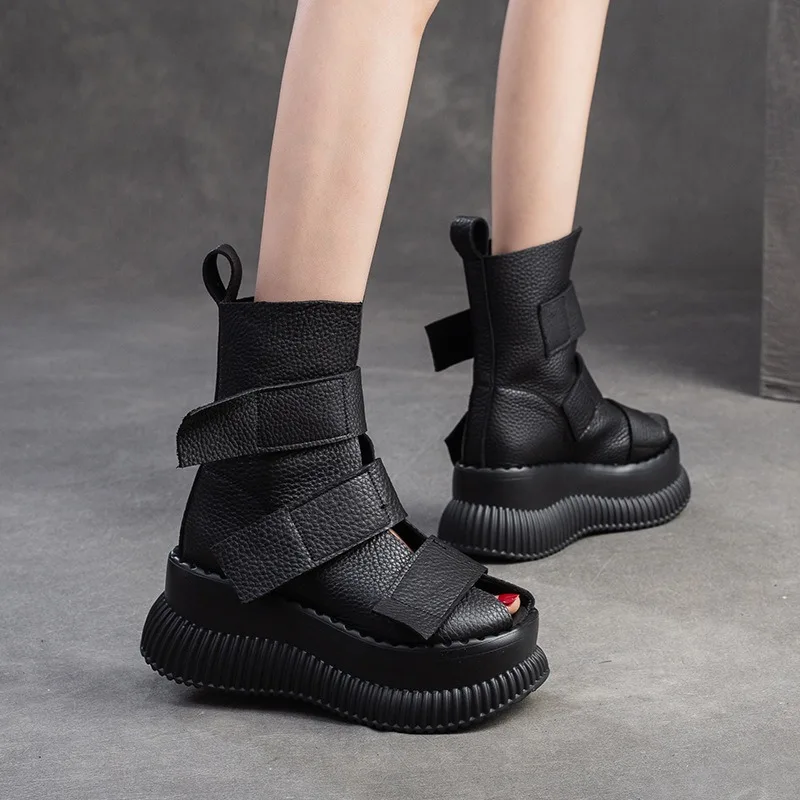
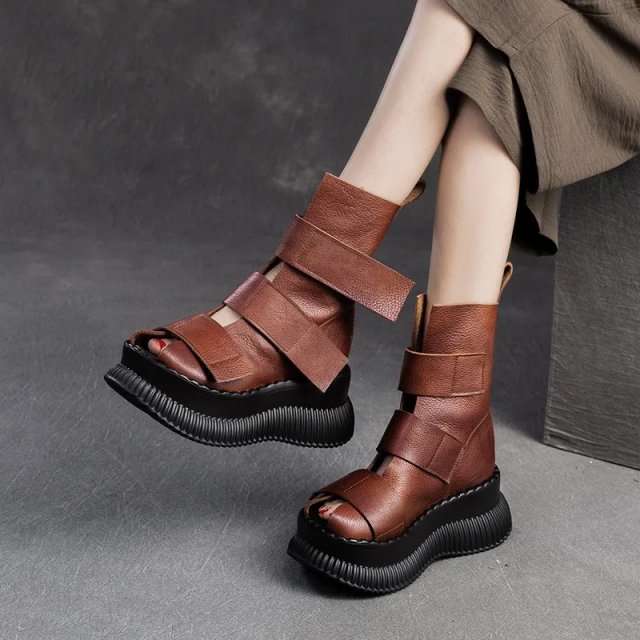
Elevate your footwear game with these stunning open-toe ankle boots designed for the modern woman who values style, comfort, and versatility. Crafted from premium genuine leather, these boots combine a chic retro vibe with contemporary sophistication. Whether you’re heading out for a casual brunch, a night out with friends, or a day of errands, these boots are your perfect companion. Their luxurious design ensures you’ll stand out, while the durable construction offers long-lasting wear.
Product Features That Make These Boots Stand Out
- Premium Material: Made from high-quality genuine leather, ensuring durability and a sophisticated look.
- Thick Heels: Designed with a sturdy thick heel for added stability and style.
- Open-Toe Design: Perfect for warmer weather and showcasing your pedicure.
- Adjustable Hook and Loop Strap: A secure and customizable fit for ultimate comfort.
- Flat Platform Sole: Adds a modern touch while providing excellent support for all-day wear.
- Unique Hollow Design: Retro-inspired details that add a bold, fashionable flair.
Why You’ll Love These Boots
- Effortless Elegance: The combination of open-toe design and retro style creates a look that’s both trendy and timeless.
- Maximum Comfort: The platform sole and thick heel work together to provide support, making these boots ideal for long days on your feet.
- Versatile Styling: These boots pair seamlessly with dresses, skirts, or jeans, making them a versatile addition to your wardrobe.
- Perfect for Any Occasion: Whether it’s a casual outing or a semi-formal event, these boots have you covered.
- Durable and Long-Lasting: Genuine leather ensures these boots will remain a staple in your closet for years to come.
Find Your Perfect Fit
Available in a range of sizes, these boots are designed to accommodate various foot lengths. Please refer to the size chart to select the size that suits you best. Remember to measure your foot length carefully to ensure the ideal fit.
Take the First Step Toward Unmatched Style
Don’t miss out on these luxurious leather ankle boots that blend fashion with functionality. Click “Add to Cart” now and make these stunning open-toe boots yours. Step out confidently knowing your style is on point and your comfort is guaranteed!
Size Chart
Size 34 = US size 4 = Feet Lenght 21.6-22 cm = 8.661inch
Size 35 = US size 5 = Feet Lenght 22.1-22.5 cm = 8.858 inch
Size 36 = US size 6 = Feet Lenght 22.6-23 cm = 9.055 inch
Size 37 = US size 6.5 = Feet Lenght 23.1-23.5 cm = 9.252 inch
Size 38 = US size 7.5 = Feet Lenght 23.6-24 cm = 9.448 inch
Size 39 = US size 8.5 = Feet Lenght 24.1-24.5 cm = 9.645 inch
SHIPPING
We are proud to offer international shipping services that currently operate in over 200 countries and islands world wide. Nothing means more to us than bringing our customers great value and service. We will continue to grow to meet the needs of all our customers, delivering a service beyond all expectation anywhere in the world.
Do you ship worldwide?
Yes. We provide free shipping to over 200 countries around the world. However, there are some locations we are unable to ship to. If you happen to be located in one of those countries we will contact you.
What about customs?
We are not responsible for any custom fees once the items have been shipped. By purchasing our products, you consent that one or more packages may be shipped to you and may get custom fees when they arrive to your country.
How long does shipping take?
Shipping time varies by location. These are our estimates:| Location | *Estimated Shipping Time |
|---|---|
| United States | 5-20 Business days |
| Canada, Europe | 5-20 Business days |
| Australia, New Zealand | 5-20 Business days |
| Central & South America | 5-25 Business days |
| Asia | 5-20 Business days |
| Africa | 5-25 Business days |
Do you provide tracking information?
Yes, you will receive an email once your order ships that contains your tracking information. If you haven’t received tracking info within 5 days, please contact us.
My tracking says “no information available at the moment”.
For some shipping companies, it takes 2-5 business days for the tracking information to update on the system. If your order was placed more than 5 business days ago and there is still no information on your tracking number, please contact us.
Will my items be sent in one package?
For logistical reasons, items in the same purchase will sometimes be sent in separate packages, even if you've specified combined shipping.
If you have any other questions, please contact us and we will do our best to help you out.
RETURNS
Order cancellation
All orders can be cancelled until they are shipped. If your order has been paid and you need to make a change or cancel an order, you must contact us within 12 hours. Once the packaging and shipping process has started, it can no longer be cancelled.
Refunds
Your satisfaction is our #1 priority. Therefore, you can request a refund or reshipment for ordered products if:
- If you did not receive the product within the guaranteed time (45 days not including 1-3 day processing) you can request a refund or a reshipment.
- If you received the wrong item you can request a refund or a reshipment.
- If you do not want the product you’ve received you may request a refund but you must return the item at your expense and the item must be unused.
We do not issue the refund if:
- Your order did not arrive due to factors within your control (i.e. providing the wrong shipping address)
- Your order did not arrive due to exceptional circumstances outside the control of empirale.com (i.e. not cleared by customs, delayed by a natural disaster).
- Other exceptional circumstances outside the control of empirale.com.
*You can submit refund requests within 15 days after the guaranteed period for delivery (45 days) has expired. You can do it by sending a message on Contact Us page
If you are approved for a refund, then your refund will be processed, and a credit will automatically be applied to your credit card or original method of payment, within 14 days.
Exchanges
If for any reason you would like to exchange your product, perhaps for a different size in clothing, you must contact us first and we will guide you through the steps.
Please do not send your purchase back to us unless we authorise you to do so.
Order cancellation
All orders can be cancelled until they are shipped. If your order has been paid and you need to make a change or cancel an order, you must contact us within 12 hours. Once the packaging and shipping process has started, it can no longer be cancelled.
Refunds
Your satisfaction is our #1 priority. Therefore, you can request a refund or reshipment for ordered products if:
- If you did not receive the product within the guaranteed time( 45 days not including 2-5 day processing) you can request a refund or a reshipment.
- If you received the wrong item you can request a refund or a reshipment.
- If you do not want the product you’ve received you may request a refund but you must return the item at your expense and the item must be unused.
We do not issue the refund if:
- Your order did not arrive due to factors within your control (i.e. providing the wrong shipping address)
- Your order did not arrive due to exceptional circumstances outside the control of empirale.com (i.e. not cleared by customs, delayed by a natural disaster).
- Other exceptional circumstances outside the control of https://empirale.com
*You can submit refund requests within 15 days after the guaranteed period for delivery (45 days) has expired. You can do it by sending a message on Contact Us page
If you are approved for a refund, then your refund will be processed, and a credit will automatically be applied to your credit card or original method of payment, within 14 days.
Exchanges
If for any reason you would like to exchange your product, perhaps for a different size in clothing. You must contact us first and we will guide you through the steps.
Please do not send your purchase back to us unless we authorise you to do so.
Customer Reviews
There are no reviews yet
Write a Review
We Think You’ll Love
Top picks just for you