Breathing Exercises for Anxiety Attacks: Quick Calm Guide
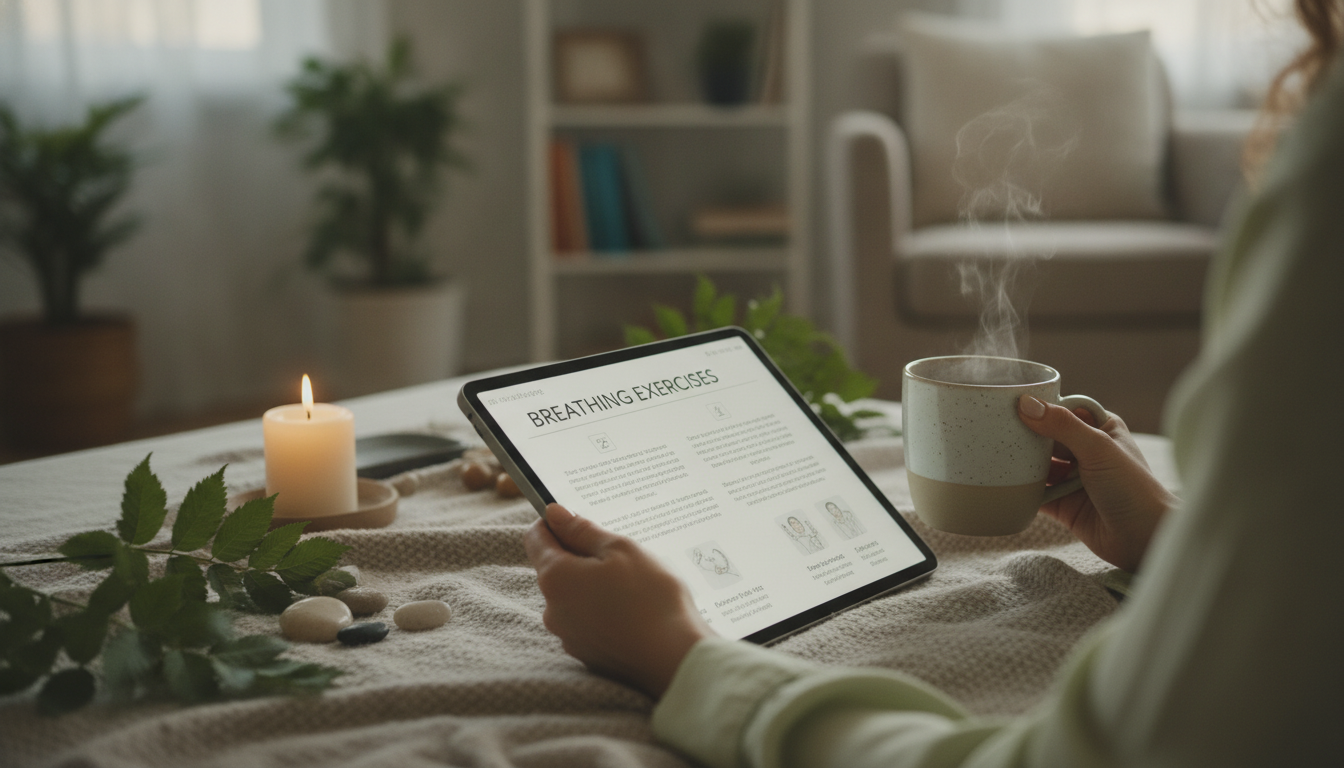
Simple Breathing Exercises to Calm Anxiety Attacks
Fast, steady breathing techniques can help reduce the physical intensity of anxiety surges by slowing the breath, easing chest tightness, and giving attention a simple pattern to follow. This guide shares practical exercises that can be used anywhere, plus a structured way to practice so the skills feel accessible during a spike of panic or worry.
Why breathing helps when anxiety spikes
When anxiety ramps up, breathing often becomes faster and shallower. That shift can intensify symptoms like dizziness, tingling, lightheadedness, and a “floaty” sense of unreality—sensations that can feel scary even when they’re simply the body responding to stress. Slowing the breath, especially the exhale, can reduce the intensity of those sensations and help the body settle.
Longer exhales are often calming because they nudge the nervous system away from “fight-or-flight” activation and toward a more regulated state. Just as important, a repeatable pattern (counting, pacing, or a short script) gives your mind a concrete task when thoughts feel loud or relentless. This isn’t a performance: the goal is “a little calmer,” not “perfectly calm.”
For more background on how stress affects the body and why regulation skills matter, the American Psychological Association offers a helpful overview.
A 60-second reset to start with
This quick reset is designed to be simple enough to use in a grocery line, on a commute, or before a meeting.
1) Posture (10 seconds)
Sit with both feet on the floor or stand with knees soft. Let your shoulders drop and unclench your jaw. If it helps, rest a hand lightly on your belly or ribs—no pressure, just a cue.
2) Orienting (15 seconds)
Name 3 things you can see and 2 sounds you can hear. This gentle “orienting” can interrupt spiraling thoughts and bring attention back to what’s actually happening right now.
3) Paced exhale (35 seconds)
Inhale gently through your nose for 3–4 counts, then exhale slowly for 5–7 counts. Repeat for 6–8 breaths. Keep the inhale easy and the exhale unforced—think “slow release,” not “push.” If nose breathing feels blocked, breathe out through pursed lips and extend the exhale.
Core exercises to use during anxiety attacks
These options share one principle: comfort first. If any step increases panic or makes you feel “air hungry,” reduce the intensity and return to a softer, slower breath.
Box breathing (4–4–4–4)
Inhale for 4, hold for 4, exhale for 4, hold for 4. Repeat for 2–4 minutes. If holding feels uncomfortable, reduce the counts to 3 or skip the holds entirely. The Cleveland Clinic describes box breathing and why it can be stabilizing.
4–7–8 adapted (skip the hold at first)
Inhale for 4, then exhale for 6–8. If the traditional hold makes you tense, leave it out and focus on a longer exhale than inhale. Over time, the exhale length matters more than strict numbers.
Physiological sigh (fast relief for a surge)
Inhale through the nose, then take a small “top-up” inhale, then exhale slowly through the mouth. Do 2–3 rounds, then return to gentle nose breathing. Many people find this helpful when panic spikes suddenly.
Coherent breathing (steady and sleep-friendly)
Aim for 5–6 breaths per minute—about inhale 5, exhale 5. Use a timer, a soft counting rhythm, or a metronome-style app. This is a strong choice for sustained anxiety or winding down at night.
Pursed-lip breathing (when breathing feels tight)
| Technique | Best for | How long | Adjust if it feels hard |
|---|---|---|---|
| Paced exhale (4 in / 6 out) | Racing heart, chest tightness | 1–3 minutes | Shorten inhale; keep exhale slow and comfortable |
| Box breathing | Overthinking, agitation | 2–4 minutes | Reduce counts; skip holds if they increase panic |
| Physiological sigh | Sudden surge of panic | 30–60 seconds | Do only 2 sighs, then switch to gentle breathing |
| Coherent breathing | Sustained anxiety, bedtime | 5–10 minutes | Use 4/4 counts if 5/5 feels too slow |
| Pursed-lip breathing | Feeling “air hunger” | 2–5 minutes | Keep exhale longer; avoid forcing a big inhale |
What to do when counting makes anxiety worse
For a broader look at relaxation approaches (breathing, muscle relaxation, and more), the National Center for Complementary and Integrative Health (NCCIH) compiles options and safety notes.
A simple practice plan so it’s easier during a flare-up
When to pause and seek extra support
Digital eBook: Simple Breathing Exercises to Calm Anxiety Attacks
If you want a structured, easy-to-reference format, Simple Breathing Exercises to Calm Anxiety Attacks (digital download) organizes techniques by real-life moments—sudden panic, ongoing worry, bedtime, and on-the-go situations. The routines emphasize comfort-first adjustments (no forcing or “pushing through”) and are designed to build consistency so the skills feel accessible under stress.
If nausea is part of your anxiety cycle—especially during travel—No-Nausea Ride: The Ultimate Digital Guide to Beating Motion Sickness on the Road is another quick digital resource to keep on hand.
FAQ
How long should breathing exercises take to work during an anxiety attack?
Many people notice partial relief within 1–3 minutes, especially with paced exhale breathing or a couple of physiological sighs. If you can, continue for 5–10 minutes and repeat later if symptoms return.
Can breathing exercises make panic worse?
Yes—especially if you use long breath holds or force deep inhales. Skip holds, keep the inhale gentle, prioritize a longer exhale, and stop or switch techniques if symptoms spike.
Which breathing technique is best for nighttime anxiety?
Coherent breathing (about 5 in / 5 out) or any comfortable extended-exhale pattern tends to be sleep-friendly. Keep the breath quiet, nasal, and easy, and avoid intense breath holds close to bedtime.












Leave a comment