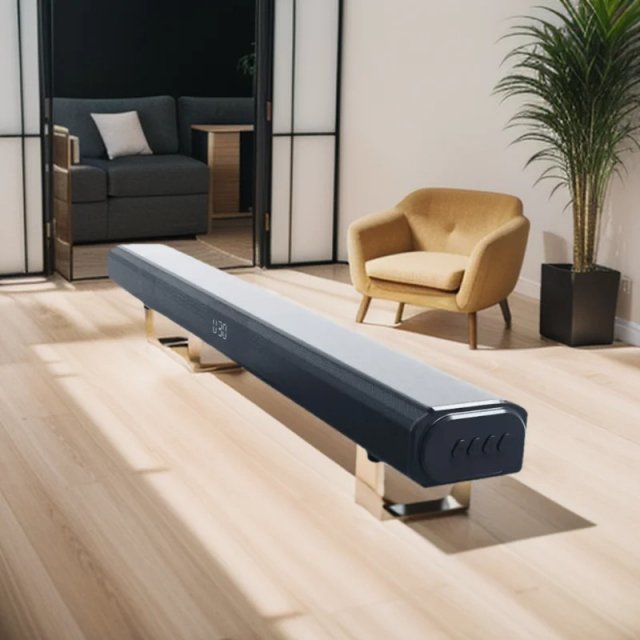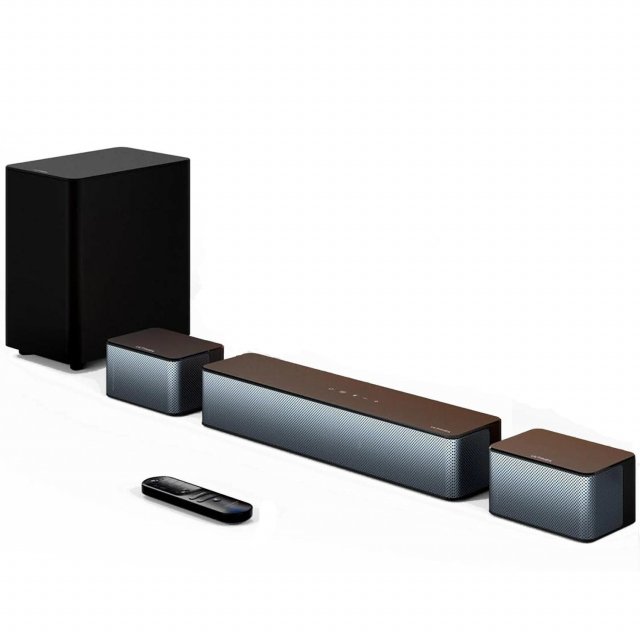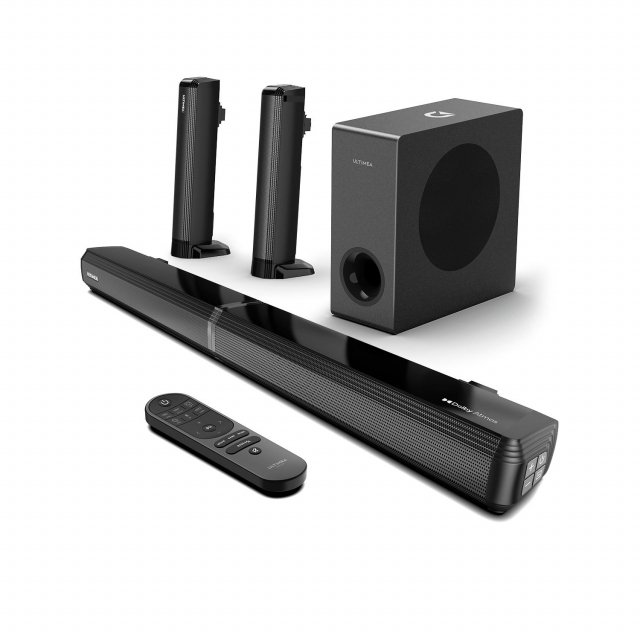


Immerse Yourself in Stunning Audio with the 120W Bluetooth Sound Bar
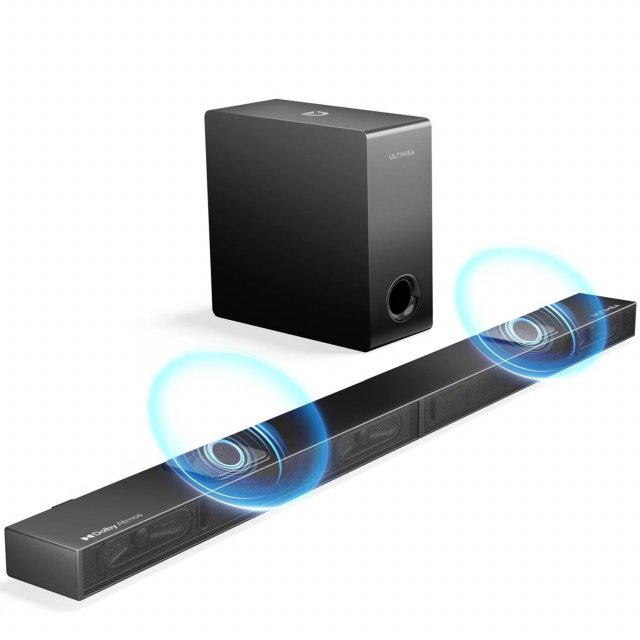
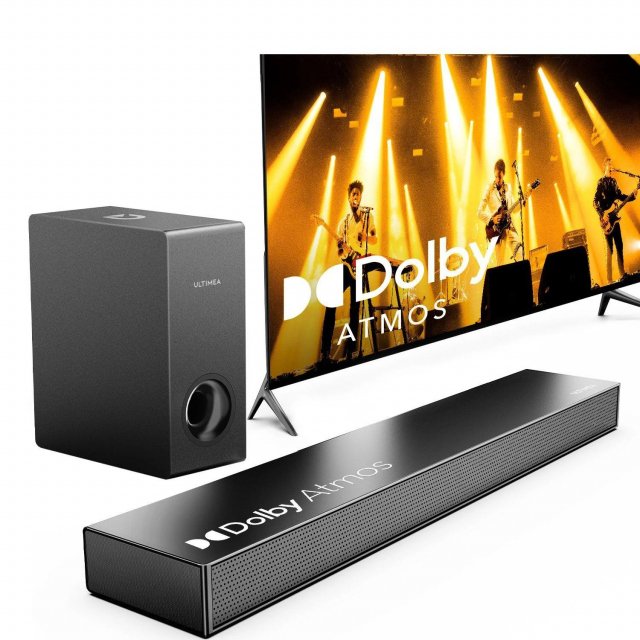
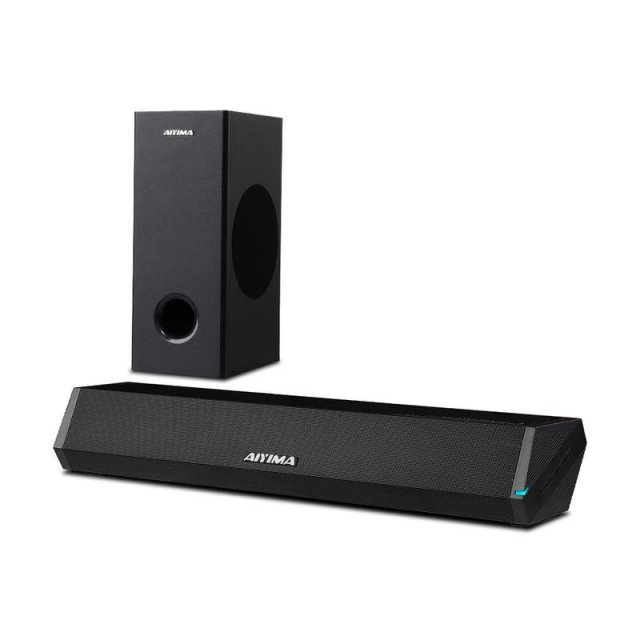
Transform your home entertainment with the 120W Bluetooth Sound Bar, a wireless speaker system designed to deliver cinematic sound right in your living room. Whether you’re watching your favorite movies, jamming to music, or enjoying an intense gaming session, this sound bar and subwoofer combination ensures an immersive experience with crystal-clear audio and powerful bass.
Key Features That Set It Apart
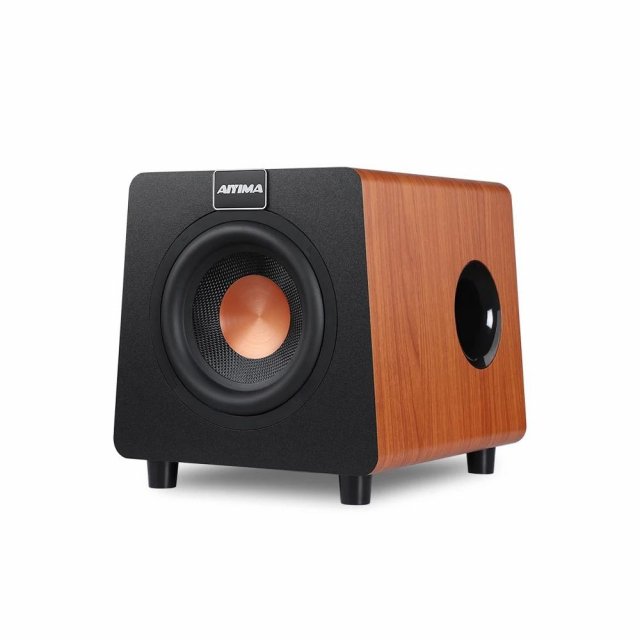
- Powerful 120W Output: Enjoy a robust audio experience with 80W from the sound bar and 40W from the wired subwoofer, providing deep bass and 105dB sound that fills any room.
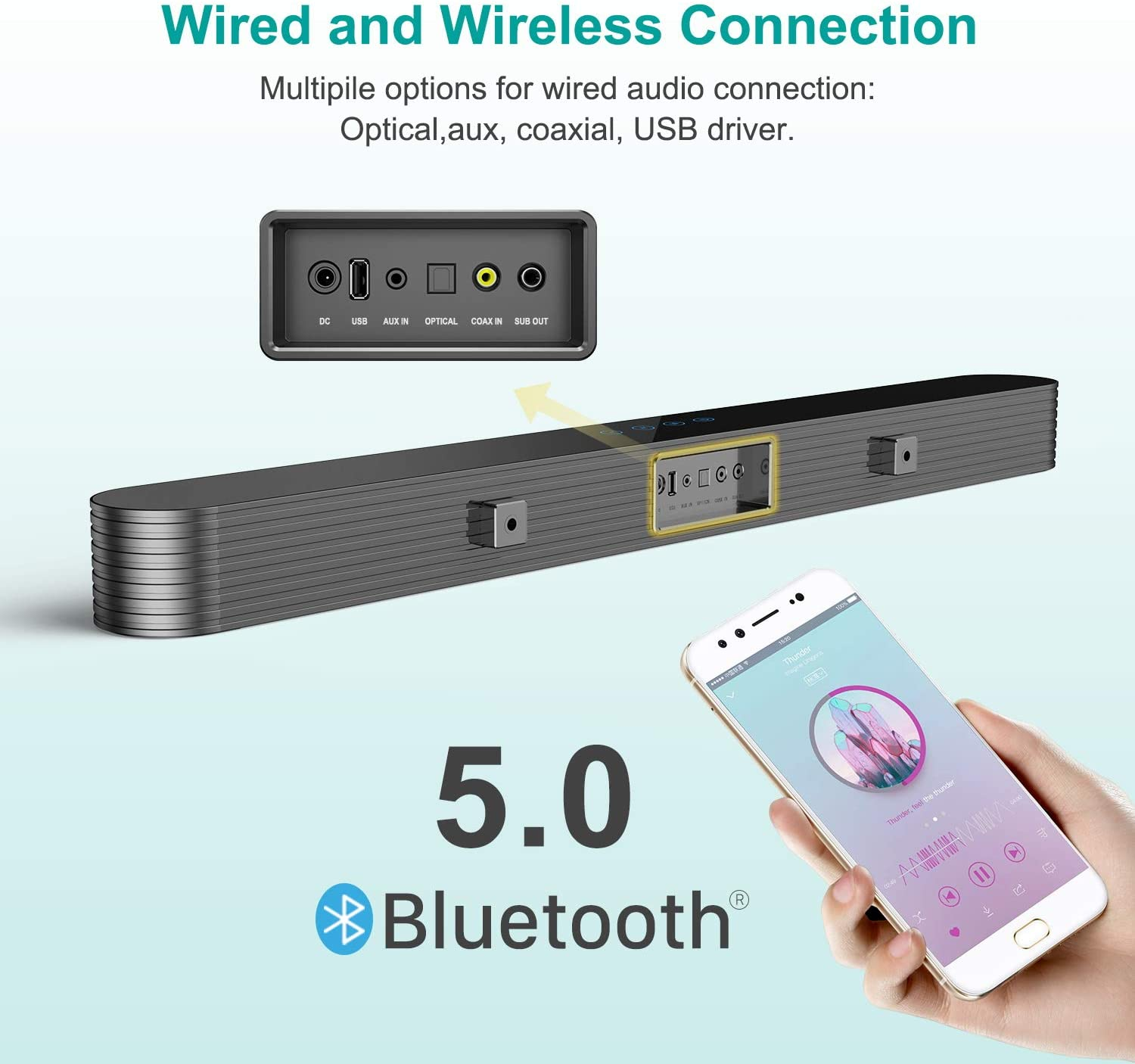
- Seamless Connectivity: Supports Bluetooth 5.0 for wireless streaming, as well as AUX, Optical, Coaxial, and USB wired connections for versatile input options.
- Customizable Sound Modes: Fine-tune your listening with DSP technology, offering modes for movies, music, and dialogue to enhance every audio moment.
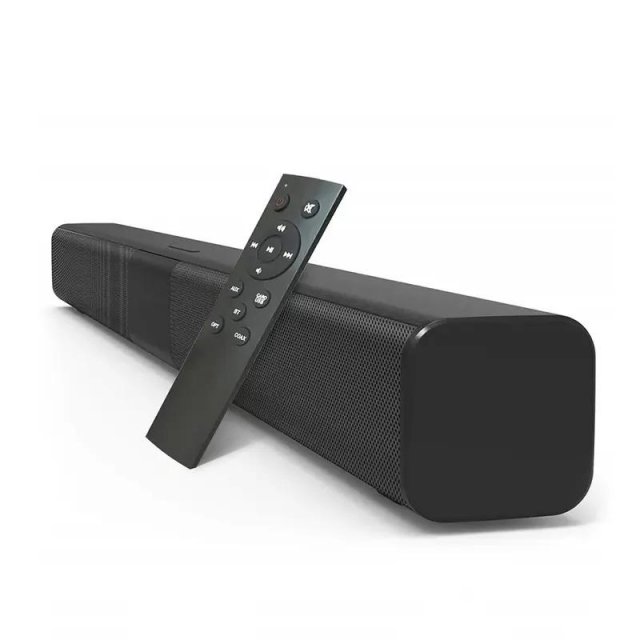
- Dual Control Options: Adjust settings with ease using the sleek touch panel or the included infrared remote control.
- Elegant LED Display: RGB LED indicators provide a modern touch while keeping you informed about the system’s status.
Why Choose This Sound Bar System?
The 120W Bluetooth Sound Bar is perfect for any occasion—movie nights, gaming sessions, or simply elevating your TV’s audio performance. The wired 6.25-inch subwoofer ensures deep, resonating bass, while the sleek design seamlessly blends into any room. The multiple input options make it easy to connect to TVs, gaming consoles, or other devices, giving you unparalleled versatility.
Benefits You’ll Love
- Rich and immersive audio for movies, music, and games.
- Simple setup and compatibility with a wide range of devices.
- Adjustable bass to suit your personal preference.
- Wireless streaming with stable Bluetooth 5.0 connectivity.
- High-quality build with user-friendly controls.
Upgrade Your Home Theater Experience Today
Don’t settle for mediocre sound when you can elevate your audio game with the 120W Bluetooth Sound Bar. Its powerful performance, stylish design, and versatile features make it an ideal choice for any home entertainment system. Get yours now and experience sound like never before!
SHIPPING
We are proud to offer international shipping services that currently operate in over 200 countries and islands world wide. Nothing means more to us than bringing our customers great value and service. We will continue to grow to meet the needs of all our customers, delivering a service beyond all expectation anywhere in the world.
Do you ship worldwide?
Yes. We provide free shipping to over 200 countries around the world. However, there are some locations we are unable to ship to. If you happen to be located in one of those countries we will contact you.
What about customs?
We are not responsible for any custom fees once the items have been shipped. By purchasing our products, you consent that one or more packages may be shipped to you and may get custom fees when they arrive to your country.
How long does shipping take?
Shipping time varies by location. These are our estimates:| Location | *Estimated Shipping Time |
|---|---|
| United States | 5-20 Business days |
| Canada, Europe | 5-20 Business days |
| Australia, New Zealand | 5-20 Business days |
| Central & South America | 5-25 Business days |
| Asia | 5-20 Business days |
| Africa | 5-25 Business days |
Do you provide tracking information?
Yes, you will receive an email once your order ships that contains your tracking information. If you haven’t received tracking info within 5 days, please contact us.
My tracking says “no information available at the moment”.
For some shipping companies, it takes 2-5 business days for the tracking information to update on the system. If your order was placed more than 5 business days ago and there is still no information on your tracking number, please contact us.
Will my items be sent in one package?
For logistical reasons, items in the same purchase will sometimes be sent in separate packages, even if you've specified combined shipping.
If you have any other questions, please contact us and we will do our best to help you out.
RETURNS
Order cancellation
All orders can be cancelled until they are shipped. If your order has been paid and you need to make a change or cancel an order, you must contact us within 12 hours. Once the packaging and shipping process has started, it can no longer be cancelled.
Refunds
Your satisfaction is our #1 priority. Therefore, you can request a refund or reshipment for ordered products if:
- If you did not receive the product within the guaranteed time (45 days not including 1-3 day processing) you can request a refund or a reshipment.
- If you received the wrong item you can request a refund or a reshipment.
- If you do not want the product you’ve received you may request a refund but you must return the item at your expense and the item must be unused.
We do not issue the refund if:
- Your order did not arrive due to factors within your control (i.e. providing the wrong shipping address)
- Your order did not arrive due to exceptional circumstances outside the control of empirale.com (i.e. not cleared by customs, delayed by a natural disaster).
- Other exceptional circumstances outside the control of empirale.com.
*You can submit refund requests within 15 days after the guaranteed period for delivery (45 days) has expired. You can do it by sending a message on Contact Us page
If you are approved for a refund, then your refund will be processed, and a credit will automatically be applied to your credit card or original method of payment, within 14 days.
Exchanges
If for any reason you would like to exchange your product, perhaps for a different size in clothing, you must contact us first and we will guide you through the steps.
Please do not send your purchase back to us unless we authorise you to do so.
Order cancellation
All orders can be cancelled until they are shipped. If your order has been paid and you need to make a change or cancel an order, you must contact us within 12 hours. Once the packaging and shipping process has started, it can no longer be cancelled.
Refunds
Your satisfaction is our #1 priority. Therefore, you can request a refund or reshipment for ordered products if:
- If you did not receive the product within the guaranteed time( 45 days not including 2-5 day processing) you can request a refund or a reshipment.
- If you received the wrong item you can request a refund or a reshipment.
- If you do not want the product you’ve received you may request a refund but you must return the item at your expense and the item must be unused.
We do not issue the refund if:
- Your order did not arrive due to factors within your control (i.e. providing the wrong shipping address)
- Your order did not arrive due to exceptional circumstances outside the control of empirale.com (i.e. not cleared by customs, delayed by a natural disaster).
- Other exceptional circumstances outside the control of https://empirale.com
*You can submit refund requests within 15 days after the guaranteed period for delivery (45 days) has expired. You can do it by sending a message on Contact Us page
If you are approved for a refund, then your refund will be processed, and a credit will automatically be applied to your credit card or original method of payment, within 14 days.
Exchanges
If for any reason you would like to exchange your product, perhaps for a different size in clothing. You must contact us first and we will guide you through the steps.
Please do not send your purchase back to us unless we authorise you to do so.
Customer Reviews
There are no reviews yet
Write a Review
We Think You’ll Love
Top picks just for you