Realistic Wooden Play Kitchen: Stove, Oven & Fun Ideas
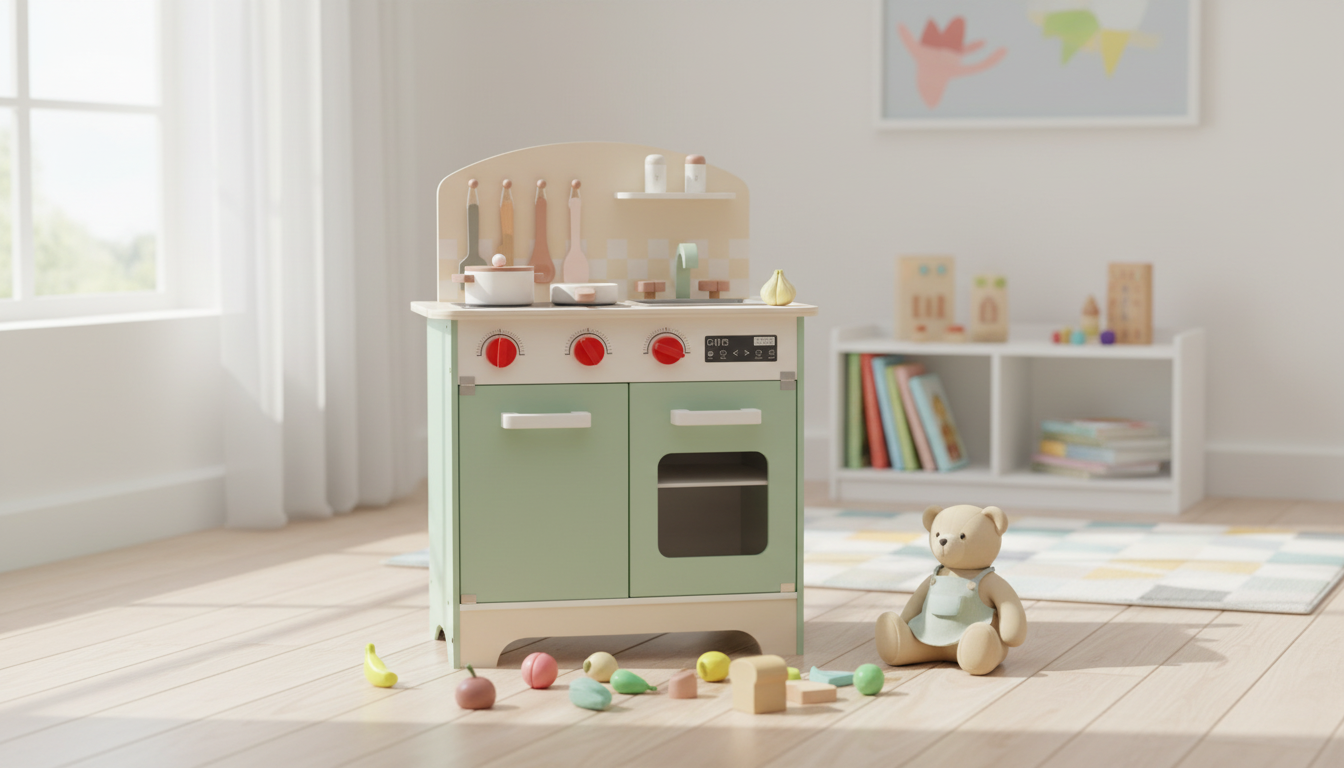
A realistic wooden play kitchen turns everyday routines into hands-on, screen-free play. Instead of watching cooking videos, kids get to “make dinner” with their own stove, oven, and accessories—opening doors, turning knobs, setting out dishes, and inventing stories that feel just like real life (only kid-sized and parent-approved).
What makes a play kitchen feel realistic
The most engaging play kitchens aren’t just cute—they’re laid out like the kitchen kids see at home. When a set includes a stove-and-oven combo, children can naturally copy the familiar flow of cooking: prep, cook, serve, and “clean up.” That simple routine gives pretend play structure while still leaving room for imagination.
Accessories also matter. A few well-chosen pieces can spark open-ended scenarios: a pretend café, a family dinner for stuffed animals, or a cooking show where one child is the host and another is the camera operator. The more kids can place, organize, and move items around, the more active the play becomes—turning role-play into something they physically do, not something they passively watch.
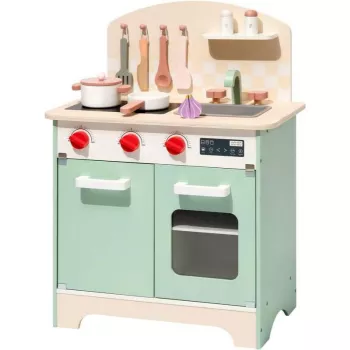
For a realistic centerpiece that encourages day-to-day storytelling, see the Wooden Play Kitchen Set for Kids – Realistic Chef Pretend Kitchen with Stove, Oven, and Accessories.
Stove, oven, and accessory play ideas
Once the kitchen is set up, a few simple prompts can help kids jump in quickly—especially for first-time pretend chefs.
- Stove play: Create tiny “recipes” with clear steps—heat, stir, serve. Kids naturally practice memory and sequencing as they repeat the routine.
- Oven play: Pretend baking (cookies, pizza, bread) builds patience and turn-taking while everyone waits for the imaginary timer.
- Accessories: Try a pantry organization game—sort items by color, size, or pretend “food groups,” then “shop” from the pantry for dinner.
- Role-play prompts: Restaurant, cooking show, grocery delivery, birthday party, or family dinner—each one nudges new vocabulary and social play.
Quick activity menu for different ages
| Age range | Best-fit pretend play | Skill focus |
|---|---|---|
| 2–3 | Simple cooking and serving | Vocabulary, matching, fine-motor practice |
| 3–4 | Restaurant with roles | Social skills, turn-taking, storytelling |
| 4–6 | Recipe steps and “meal planning” | Sequencing, early math (counting, portions) |
Materials and safety checks to look for
Wooden play kitchens are popular because they tend to feel sturdy and “furniture-like,” but it’s still worth doing a few practical checks—especially if toddlers or younger siblings will be nearby.
- Smooth surfaces and rounded edges: Helps reduce snags and scrapes during energetic play.
- A stable base: Kids lean in to stir, reach into the oven, and pull open doors—stability helps prevent tipping.
- Non-toxic finishes and child-safe paints: Look for clear labeling where available, and avoid strong chemical odors.
- Age-appropriate accessory sizing: Smaller pieces can be a choking hazard for younger children in the household.
For general toy safety guidance, it’s helpful to review the U.S. Consumer Product Safety Commission’s recommendations at CPSC: Toy Safety.
At-home safety checklist after setup
| Check | What to do | How often |
|---|---|---|
| Tight hardware | Retighten screws/fasteners after assembly | After day 1, then monthly |
| Door clearance | Confirm doors open/close smoothly without pinching | Weekly at first |
| Stability | Place on flat surface; avoid thick rugs that wobble | Once, then as needed |
| Accessory condition | Remove any cracked pieces and replace | Monthly |
Skills kids build through pretend cooking
Pretend play is more than entertainment—it’s a practical way for children to explore language, emotions, and problem-solving while they’re having fun. The American Academy of Pediatrics highlights the benefits of play for development and resilience in The Power of Play.
- Language development: Naming tools and foods, describing actions, and using sequence words like “first,” “next,” and “last.”
- Social-emotional learning: Sharing space, negotiating roles, and practicing empathy (“Do you want more?”).
- Fine-motor control: Turning knobs, opening doors, placing items on shelves, and arranging accessories with precision.
- Early math and logic: Sorting, counting pieces, comparing sizes, and following simple “recipes.”
For a helpful overview of how children learn through everyday activities, see CDC: Milestones – How Children Play and Learn.
Where it fits best at home (and how to keep it tidy)
A play kitchen works best when it feels like a dedicated “place” to play—easy to access, but not in the way. Placing it near a wall in a playroom or family room helps define a kitchen corner where stories can continue day after day.
A practical gift for birthdays and holidays
Product page and what to confirm before ordering
Shop the main set here: Wooden Play Kitchen Set for Kids – Realistic Chef Pretend Kitchen with Stove, Oven, and Accessories.
More in-stock picks from our store
- Smart Thrift: Unlocking Style Without Wasting Money – A Strategic Guide to Thrift Shopping
- No-Nausea Ride: The Ultimate Digital Guide to Beating Motion Sickness on the Road
FAQ
What age is a wooden play kitchen best for?
Many wooden play kitchens work well from toddler years through early elementary ages, since play can shift from simple pretend cooking to more detailed restaurant-style role-play. For younger toddlers, adult supervision is important—especially around small accessory pieces.
How can accessories be stored so cleanup is easy for kids?
Use a few small bins or baskets and label them with pictures (utensils, food, plates) so kids can match items during cleanup. Rotating a portion of accessories weekly also keeps the space tidy while making play feel “new” again.
Is wood better than plastic for a play kitchen?
Wood can feel sturdier and more furniture-like, while plastic is often lighter and easy to wipe clean—both can be great choices. The best option is the one that’s stable, has smooth edges, and uses child-safe finishes appropriate for your child’s age and play style.













Leave a comment