Curry Nonstick Roaster with Rack for Better Browning
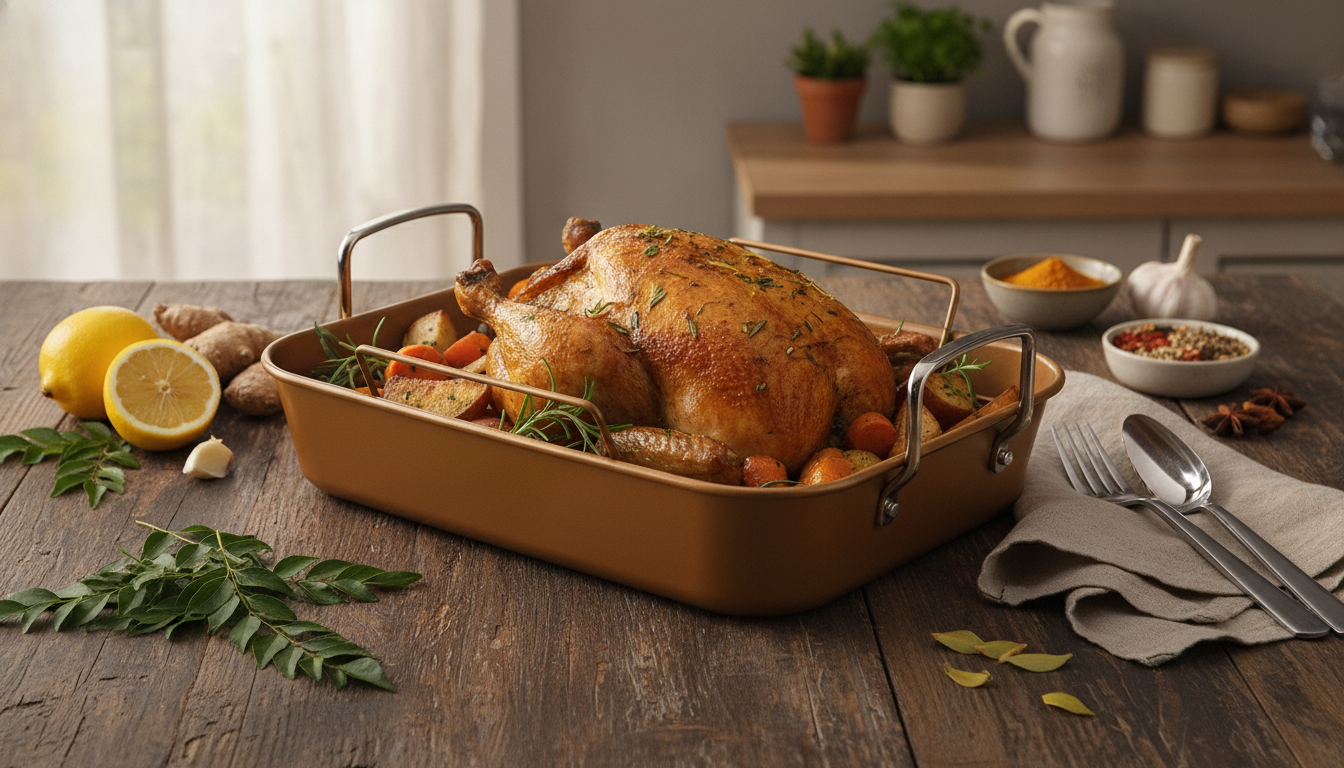
Curry Nonstick Roaster with Rack: Even Roasts, Easier Cleanup
A roaster with a rack is built for the kind of cooking that needs steady heat, lifted airflow, and pan juices you can actually use. The Curry Nonstick Roaster with Rack is designed to handle poultry, roasts, and vegetables with less sticking and simpler cleanup—while the rack helps promote browning and keeps food out of rendered fat.
What a Roaster-and-Rack Setup Does Better
The difference between “roasted” and “kind of steamed” often comes down to airflow and where the moisture goes. A rack gives you a few practical advantages that show up on the plate.
- Lifts food for airflow, helping skin and edges brown more evenly
- Keeps meat from sitting in drippings, reducing sogginess
- Makes it easier to collect pan juices for gravy or sauces
- Helps with safer lifting and transferring when the rack has handles
- Creates space for vegetables to roast under or around the main item
Curry Nonstick Roaster with Rack at a Glance
This roaster is shaped for oven roasting and includes a removable rack to elevate food for drainage and heat circulation. The nonstick surface is meant to reduce stubborn sticking—especially helpful when sugars in marinades or natural proteins start to caramelize.
- Designed for oven roasting with a removable rack for elevation and drainage
- Nonstick cooking surface aims to reduce sticking and speed up cleanup
- A practical option for weeknight roasts, holiday poultry, and one-pan meals
- Pairs well with simple techniques: preheating, drying the protein, and resting after roasting
Quick Facts
| Item | Details |
|---|---|
| Product | Curry Nonstick Roaster with Rack |
| Price | 44.67 USD |
| Availability | In stock |
| Product page | https://empirale.com/curry-nonstick-roaster-with-rack/ |
Cooking Results: Browning, Juiciness, and Drippings
A rack isn’t only about convenience—it changes how heat and moisture behave during roasting. That affects three things most home cooks care about: color, texture, and flavor.
Browning
With the food elevated, hot air can reach more surface area instead of only the top and sides. That circulation helps browning develop more evenly, especially on poultry skin and the underside of a roast.
Juiciness
When meat sits directly in pooled fat and moisture, the bottom can soften and “steam,” which can dull crust development. Elevation can reduce that effect so the exterior stays more roast-like while the interior cooks gently.
Drippings
Rendered juices collect in the pan rather than soaking into the food. That’s ideal for gravy, au jus, or pan sauces—especially when you deglaze the roasting pan after the meat rests. For food safety, cook poultry to safe internal temperatures and verify with a thermometer; the USDA provides clear guidance for poultry and safe minimum temps (USDA FSIS: Cooking Poultry; USDA FSIS: Safe Minimum Internal Temperatures).
Vegetables that taste like the roast
Roasting potatoes, carrots, onions, or squash around the rack (or underneath, if there’s clearance) lets them pick up flavor from the drippings while still browning at the edges. Cut vegetables to similar size, toss with a little oil, then season again at the end for the best contrast.
Finishing with a rest
After roasting, a short rest helps redistribute juices before carving. This makes slices cleaner and helps prevent the cutting board from turning into the “missing moisture” from your roast.
Nonstick Care That Helps It Last
Nonstick is easiest to love when it stays smooth and releases well. A few habits go a long way toward keeping the surface performing like new. For general background on nonstick cookware safety and handling, see Harvard Health Publishing’s overview (Harvard Health: Nonstick cookware safety).
- Use silicone, nylon, or wooden utensils to help avoid scratching
- Let the pan cool before washing to reduce stress on the coating
- Hand-wash when possible; if using a dishwasher, follow the maker’s care guidance
- Avoid aerosol cooking sprays that can leave residue; use oil or butter instead
- Store carefully to prevent contact scratches (a soft liner between pans helps)
How to Use the Rack for Different Meals
The rack is more than a “turkey accessory.” It’s a flexible tool that can help you roast cleaner and plan meals more efficiently.
- Whole chicken or turkey breast: Place on the rack, pat skin dry, and season; add aromatics and a little liquid to the pan for drippings.
- Pork loin or beef roast: Elevate for even heat; sear beforehand if desired, then roast to temperature.
- Fish (larger sides): Use parchment on the rack if needed to reduce sticking while still improving airflow.
- Vegetable roasts: Remove the rack for a larger flat roasting surface, or keep it in and roast veg underneath.
- Batch cooking: Roast a main protein up top and meal-prep vegetables below for a two-level approach.
Sizing and Fit Tips Before Roasting
Cleaning and Storage Checklist
More In-Stock Picks
- Curry Nonstick Roaster with Rack
- 45000RPM Rechargeable Nail Drill Machine with 12 Bits & LCD Display
- No-Nausea Ride: The Ultimate Digital Guide to Beating Motion Sickness on the Road
- Smart Thrift: Unlocking Style Without Wasting Money – A Strategic Guide to Thrift Shopping
FAQ
Is it safe to use a nonstick roaster at high oven temperatures?
Follow the manufacturer’s temperature guidance for the specific nonstick coating. Avoid overheating an empty pan, and keep the oven within the recommended range to help protect the coating and maintain performance.
Should the rack be used for vegetables too?
Use the rack when elevating a main item (like poultry) and placing vegetables underneath to catch drippings. Remove the rack when roasting vegetables alone if you want more direct contact with the pan for deeper browning.
How can drippings be used for gravy without burning?
Add a small amount of broth, wine, or water to the pan if needed to prevent dry scorching, especially with lean roasts. After roasting, skim fat, deglaze the pan, and thicken on the stove.












Leave a comment