10-Minute Qigong Flow for Calm: Gentle Daily Reset
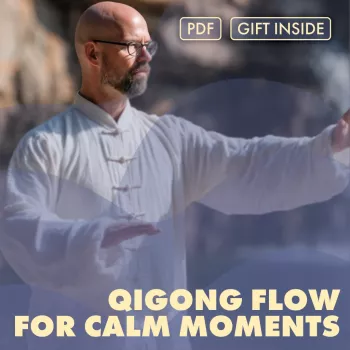
Calm doesn’t require a perfect schedule or a silent room. Gentle qigong flows offer a practical way to soften stress, steady attention, and reconnect with the body in short, repeatable moments—between meetings, before sleep, or whenever the nervous system needs a reset. This guide outlines how to use simple movements, breath, and mindful focus to build a sustainable wellness routine without pushing intensity.
What makes qigong feel calming
Qigong tends to feel soothing because it pairs simple movement with steady attention and comfortable breathing. Instead of “doing more,” the practice nudges the body out of bracing and into smoother, more efficient coordination.
- Slow, coordinated movement supports a downshift: Gentle pacing reduces unnecessary muscular gripping and naturally encourages fuller breathing.
- Simple attention cues interrupt mental looping: Posture, breath timing, and sensation give the mind something steady to return to when thoughts race.
- Soft ranges and weight shifts promote comfort: Circulation and joint ease can improve without fitness-level exertion.
- Consistency matters more than duration: Two to ten minutes daily often feels more stabilizing than occasional long sessions.
For a research-informed overview of qigong and how it’s generally used, see NCCIH: Tai Chi and Qigong—What You Need To Know. For a clear explanation of how stress can affect the body, the American Psychological Association’s overview is a helpful reference.
A 10-minute calm-moment flow (no equipment)
This short flow is designed to be repeatable and non-intimidating. Move within an easy range, keep transitions smooth, and treat “gentle” as the goal.
1) Arrival (1 minute)
Stand or sit tall. Relax the jaw, shoulders, and hands. Take three slow breaths, letting the exhale be slightly longer than the inhale.
2) Spinal wave (2 minutes)
Make a small wave through the spine: a subtle pelvic tilt, then a soft rounding and lengthening through the upper back. Keep it comfortable—this is more like lubricating than stretching.
3) Cloud hands variation (3 minutes)
Shift weight side-to-side while the arms float across the body. Keep elbows soft and wrists relaxed, as if the hands are being moved by the torso rather than “pushed” by the shoulders.
4) Gather and settle (2 minutes)
Inhale as hands rise to chest height. Exhale as hands lower. Imagine the exhale “dropping” tension down and away.
5) Closing stillness (2 minutes)
Rest hands over the lower abdomen. Notice temperature, breath rhythm, and the sensation of grounded feet (or grounded seat if sitting). Let the eyes soften.
Quick options by time and energy level
| When to use it | Duration | What to do | What it supports |
|---|---|---|---|
| Between tasks | 2–3 minutes | 3 slow breaths + gentle neck/shoulder circles + hands down the front line | Mental reset, posture relief |
| Midday slump | 5 minutes | Cloud hands + light weight shifts + closing stillness | Steady energy, smoother focus |
| Evening wind-down | 8–12 minutes | Full flow + longer closing stillness | Relaxation, sleep readiness |
If you prefer a structured, step-by-step sequence you can simply press play and follow, Qigong Flow for Calm Moments: Gentle Energy Practices (Digital Guide) is designed for short daily sessions and low-friction consistency.
Breath and attention cues that reduce overwhelm
Small adjustments in breathing and focus can change how the whole flow feels. Use these cues to keep the practice calming instead of effortful.
- Exhale emphasis: Let the exhale be slightly longer than the inhale (without forcing). A longer exhale often signals “safe enough to soften.”
- Soft gaze: Look gently ahead or lower the eyes. Avoid “staring concentration,” which can quietly create jaw and shoulder tension.
- Three-point scan: Rotate attention among (1) feet/seat, (2) lower ribs, and (3) hands. When thoughts speed up, return to one anchor.
- Comfort-first range: If strain appears, reduce movement size by 50%. Qigong should feel smooth and cooperative, not like pushing through.
Building a daily routine that actually sticks
The most calming practice is the one that keeps happening. A simple routine works best when it’s easy to start and easy to repeat.
- Attach it to an existing habit: Try right after brushing teeth, before coffee, or immediately after logging off work.
- Use a “minimum viable practice”: Commit to two minutes on busy days. Continuity is the win.
- Track feelings, not performance: Notice changes in shoulder tension, breath ease, jaw softness, or mood—not whether the movement looked perfect.
- Create a calm cue: Same corner of the room, same time window, or the same quiet playlist can make starting feel automatic.
Common mistakes and easy fixes
Gentle doesn’t mean mindless. These small corrections help the flow feel more restful and less like “another task.”
Using the digital guide for calmer moments
Explore the full routine here: Qigong Flow for Calm Moments: Gentle Energy Practices | Digital Guide for Stress Relief, Mindfulness, and Daily Wellness Routine.
If travel is a major stress trigger and nausea makes it harder to relax on the road, No-Nausea Ride: Digital Guide to Beating Motion Sickness on the Road can pair well with calming breath and gentle movement breaks.
FAQ
Is qigong okay for beginners who feel stiff or stressed?
Yes—qigong is typically gentle and easy to scale. Start with smaller ranges, a slower pace, or a seated version; if you have injuries, dizziness, or medical concerns, check with a clinician before practicing.
How often should a calming qigong flow be done to notice benefits?
Short daily sessions (about 2–10 minutes) are a practical starting point. Some people feel calmer right away, while steadier changes in tension and mood often build over a few weeks with regular practice.
Can qigong help with sleep if practiced at night?
Gentle evening practice—especially with longer exhales and a quiet closing stillness—can support relaxation and sleep readiness. Keep movements soothing (not energizing), and use low lighting while avoiding bright screens close to bedtime.














Leave a comment