74-Piece Tool Set with Rotatable Cordless Screwdriver
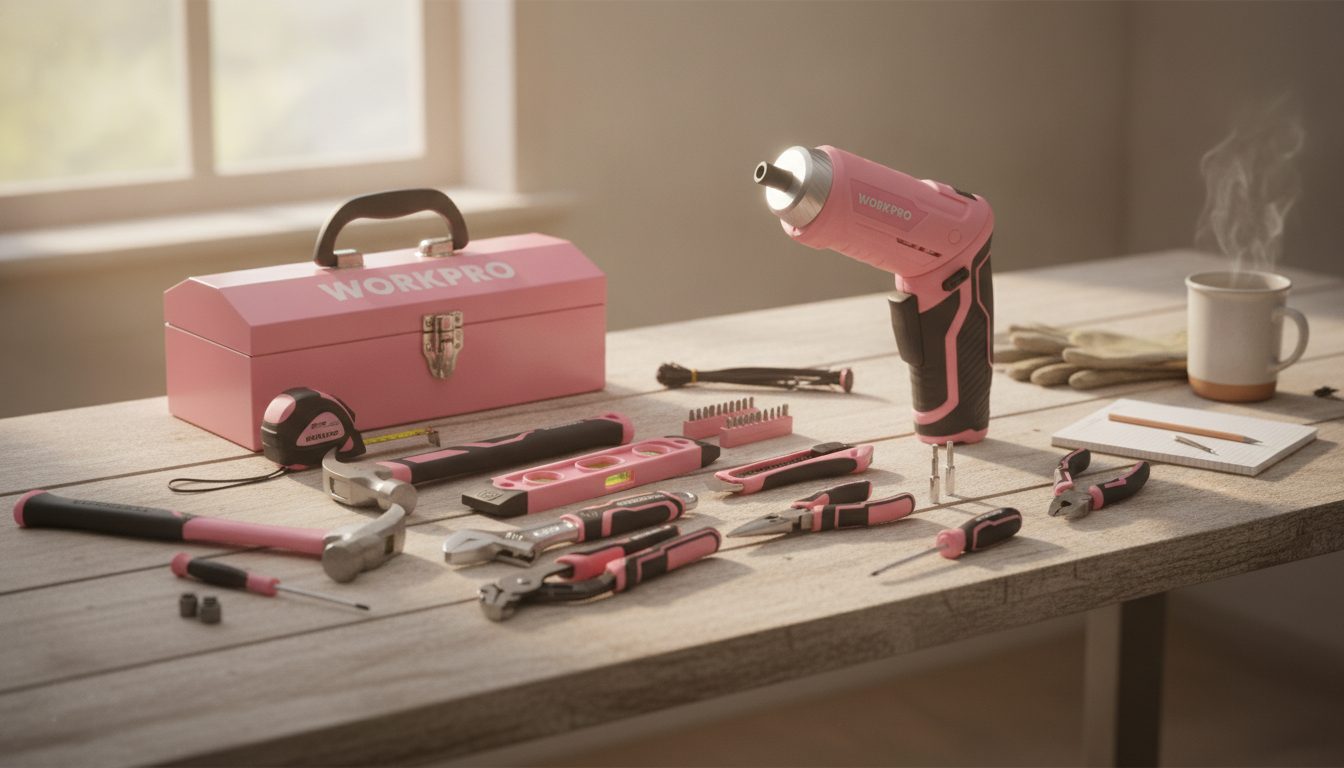
A Practical Home Kit for Everyday Fixes
A dependable home tool kit saves time on everyday fixes—tightening cabinet hinges, assembling furniture, hanging shelves, or quick appliance adjustments. The Rotatable Cordless Screwdriver & 74-Piece Household Tool Set with Steel Tool Box pairs a rotatable cordless screwdriver with a broad mix of hand tools and bits, all organized in a steel tool box for easy storage and transport. It’s the kind of set that stays ready for small problems before they turn into bigger ones.
What Comes in the Set and What It’s For
This kit is built around the jobs most homes and apartments regularly face—fasteners that loosen over time, flat-pack assemblies, and quick adjustments that don’t justify digging through junk drawers for mismatched tools.
- Rotatable cordless screwdriver for fast, repeatable screwdriving tasks and tight spaces
- Assorted screwdriver bits for common household screw types
- Core hand tools for light repairs, basic assembly, and small maintenance jobs
- Steel tool box for durability, organization, and quick access
- A single kit that reduces the need to hunt for mismatched tools around the house
Common Household Jobs and the Tool Type Typically Used
| Task | Tool Type | Tips to Avoid Damage |
|---|---|---|
| Flat-pack furniture assembly | Cordless screwdriver + correct bit | Start by hand, finish with low torque to prevent stripping |
| Cabinet hinge adjustment | Cordless screwdriver or manual driver | Use the exact bit size; stop when hinge seats firmly |
| Hanging lightweight fixtures | Hand tools (measuring/fastening) | Mark holes carefully; avoid overtightening into drywall anchors |
| Small appliance panel removal | Cordless screwdriver + precision bit | Keep screws sorted by length; do not force mismatched threads |
| Tightening door hardware | Manual tool for final snug | Final tighten by hand to avoid cracking trim or stripping screws |
Why a Rotatable Cordless Screwdriver Helps at Home
A cordless screwdriver isn’t just about speed—it’s about repeatable results and less fatigue when a project calls for “the same screw” twenty times. The rotatable design adds another layer of convenience, letting you line up straighter with the screw even when your wrist can’t comfortably follow the angle.
- Rotatable design improves reach for awkward angles (corners, inside cabinets, near back panels)
- Cordless convenience speeds up repetitive steps like driving multiple screws during assembly
- More consistent fastening than manual-only tools when doing several identical fasteners
- Useful for quick fixes: loose drawer pulls, wobbly chairs, outlet cover plates (power off first), and curtain rod brackets
- Better comfort and control during longer tasks compared with a standard hand screwdriver alone
For delicate finishes—painted cabinetry, laminate, softwood trim—controlled driving matters. A common approach is to start the screw by hand for a few turns (to ensure it’s threading correctly), then use the cordless driver to do the bulk of the work, and finally snug it by hand when you’re close to fully seated.
Steel Tool Box Benefits: Organization, Protection, and Portability
Tool kits only stay “handy” when they stay organized. A steel tool box provides a rigid shell that protects the tools, keeps small items from migrating, and makes it simpler to carry the kit from room to room without pieces spilling out.
- Steel construction resists crushing and protects tools better than soft bags in crowded closets or garages
- Keeps bits and small parts together to reduce downtime mid-task
- Portable storage makes it easy to move from room to room or take to a rental property
- Helps maintain tool condition by limiting moisture exposure and preventing loose tools from chipping or dulling
- A defined “home for every tool” makes it easier to notice missing items after a job
If your household has multiple people doing small repairs, the “everything goes back in the box” habit also prevents duplicates and reduces the odds of a half-finished project because one key bit disappeared.
Using the Kit Safely and Getting Cleaner Results
Small household jobs can still cause avoidable damage—stripped screw heads, cracked trim, or wall anchors that spin out. A few simple habits go a long way toward cleaner results and safer work.
- Match the bit to the screw head fully—partial engagement is the main cause of stripped screws
- Use the lowest effective torque setting/speed for delicate materials like particleboard, MDF, and softwoods
- For tough screws, loosen by hand first, then switch to the powered driver once threads move freely
- Avoid driving into unknown walls without checking for wiring/plumbing; use appropriate anchors for drywall
- Keep the tool box organized after each use to prevent bit loss and to reduce rust risk on metal tools
For general safety guidance on hand and power tools, review OSHA’s hand and power tools recommendations. For rechargeable battery handling and storage basics, see the CPSC’s consumer battery safety resources.
Who This Set Fits Best
Care, Storage, and Long-Term Reliability
Related In-Stock Picks
- Rotatable Cordless Screwdriver & 74-Piece Household Tool Set with Steel Tool Box (a compact “most-used tools” starter kit)
- 45000RPM Rechargeable Nail Drill Machine with 12 Bits & LCD Display (a separate rechargeable tool for detailed personal care tasks)
FAQ
Can a cordless screwdriver handle furniture assembly and basic home repairs?
Yes—cordless screwdrivers are well-suited for repetitive screwdriving in typical household materials like flat-pack panels and light wood. Use the correct bit size and consider finishing delicate fasteners by hand to avoid stripping or overdriving.
What is the advantage of a rotatable screwdriver design?
A rotatable design improves access and ergonomics in tight or awkward spaces, like inside cabinets or near corners. It also helps keep the driver straighter on the screw head, which can lead to cleaner, more controlled driving.
How should tools be stored in a steel tool box to prevent rust?
Dry tools before putting them away, store the box in a low-humidity area, and wipe metal surfaces after use. In humid climates, adding a small desiccant pack to the box can help reduce moisture buildup.














Leave a comment