Glow on the Go: 5-Minute Self-Care for Busy Days
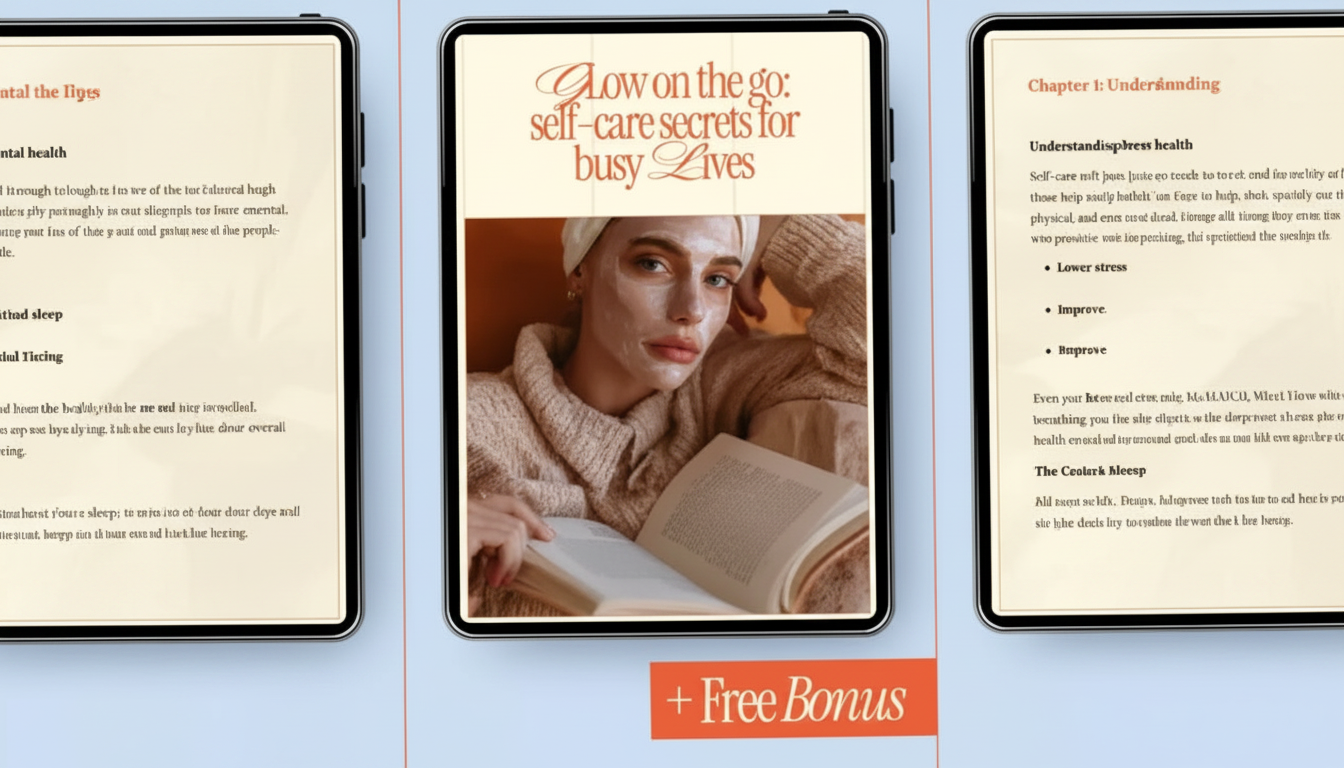
Glow on the Go: Self-Care Secrets for Busy Lives
Busy schedules don’t leave room for long routines, but they do allow for small, repeatable choices that protect energy, mood, and confidence. The goal isn’t a “perfect” wellness lifestyle—it’s a set of quick defaults you can do between meetings, commutes, caregiving, and late-night resets. When self-care is designed for real life, it becomes maintenance: the tiny actions that keep your body fueled, your mind steadier, and your appearance refreshed without stealing your time.
What “on-the-go” self-care actually looks like
On-the-go self-care works best when it’s treated like basic upkeep, not a reward you only “earn” after a hard week. Think hydration, simple nourishment, sleep protection, micro-movement, and emotional regulation—small inputs that noticeably change how you feel by mid-afternoon.
A helpful mindset is the “minimum effective dose.” If an action can be done in 30 seconds to 10 minutes and repeated often, it can deliver more results than an elaborate routine you rarely start. The next step is anchoring habits to moments that already exist: after brushing your teeth, before opening email, during kettle-boil time, or at red lights (hands-free breathing only).
Finally, remove friction. Pre-pack, pre-decide, and pre-set: keep travel-size essentials in one pouch, set recurring reminders, and build shortcuts that make the “healthy” choice the easiest choice. Instead of tracking perfection, track outcomes—energy at 2 p.m., sleep quality, irritability, cravings, and mental clarity.
The 5-minute reset stack (morning, midday, evening)
A reset stack is a tiny sequence you don’t have to think about. It’s short on purpose, and stopping on time builds trust that self-care won’t hijack your day.
| Moment | Time | Action | Why it helps |
|---|---|---|---|
| Morning | 2–5 min | Drink water + step into daylight | Supports alertness and hydration |
| Midday | 3–5 min | 60 seconds nasal breathing + stretch chest/hips | Downshifts stress response and eases tension |
| Evening | 4–7 min | Quick wash + moisturizer + set out one item for tomorrow | Reduces decision fatigue and supports wind-down |
High-stress day default: choose one breath practice, one nourishing bite, and one tiny tidy (like clearing a single surface). A timer helps keep it truly short—two minutes done consistently beats twenty minutes that never happens.
Self-care for the body: fuel, movement, and sleep protection
Fuel that prevents the crash
When you’re moving fast, energy dips often come from meals that are all carbs with no “brakes.” Pair carbs with protein or fat to keep your blood sugar steadier: yogurt + fruit, nuts + crackers, cheese + grapes, or a protein bar plus a banana. If you tend to forget lunch, set a recurring cue (calendar alert, “after my second meeting”) and keep a backup snack in your bag.
Hydration without overthinking
Micro-movement that fits reality
Sleep guardrails that don’t require a flawless night
Sleep affects mood, focus, and resilience. Keep a consistent wake time when possible, dim lights 60–90 minutes before bed, and build a short pre-sleep routine (wash face, moisturize, set tomorrow’s first step). The CDC’s sleep guidance offers practical context on why regular sleep patterns matter: https://www.cdc.gov/sleep/index.html.
Self-care for the mind: stress relief that works in public
Fast nervous-system tools
A one-line journal that keeps you moving
Boundary micro-scripts that prevent instant over-commitment
Try: “I can’t today, but I can on Tuesday at 3,” or “Let me check and get back to you.” A short delay protects your schedule and lowers resentment. For more on how stress affects the body (and why these tiny interrupts matter), the APA has a clear overview: https://www.apa.org/topics/stress/body.
Phone hygiene for mental clarity
Trim notifications to essentials, use focus modes during deep work, and set a single “check-in window” for messages so your attention isn’t constantly fragmented. If mindfulness practices appeal to you, NCCIH summarizes evidence and safety considerations here: https://www.nccih.nih.gov/health/meditation-and-mindfulness-effectiveness-and-safety.
Self-care for appearance: quick wins that boost confidence
The 3-step skincare baseline
Grooming shortcuts that make a difference
Nails as a fast confidence lever
Even simple maintenance—smoothing rough edges, quick cuticle care, and a clear top coat—can make hands look cleaner and more polished. If you like DIY upkeep between appointments, the 45000RPM Rechargeable Nail Drill Machine with 12 Bits & LCD Display is a practical tool for at-home maintenance when used carefully and gently.
Build a modern routine that survives chaos
A practical digital guide for busy schedules
If you want a ready-made framework you can pull up on your phone during breaks or wind-down time, Glow on the Go: Self-Care Secrets for Busy Lives (digital eBook) is designed around modern schedules—quick resets, simple habit anchors, and realistic routines that don’t require a total lifestyle overhaul.
FAQ
What is the easiest self-care routine to start when time is tight?
Start with a 3-part baseline: drink water, do 60 seconds of breathing or stretching, and add one simple skincare or wind-down step. Keep it consistent rather than making it long.
How can self-care fit into a packed workday without taking long breaks?
Use micro-breaks (1–3 minutes) tied to existing cues like meetings ending or refilling water, plus a simple snack plan to prevent energy crashes. Choose stress tools that work at your desk, like longer exhales and a quick posture reset.
Does a digital self-care guide actually help build routines?
Yes—pre-made frameworks and checklists reduce decision fatigue and make it easier to repeat a small set of actions. The key is selecting a few routines you can do even on low-energy days.















Leave a comment