Monthly Budget Checklist: Plan, Automate & Review (PDF)
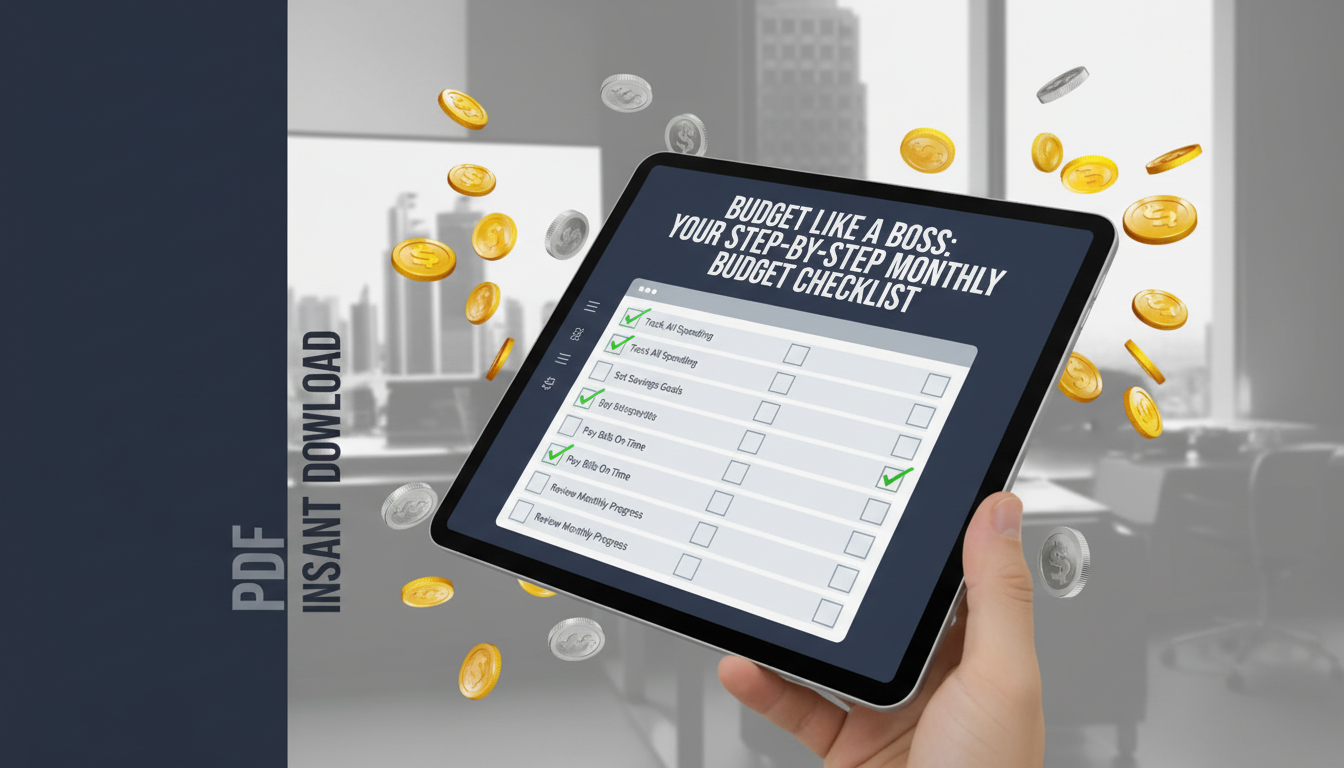
Budget Like a Boss: A Step-by-Step Monthly Budget Checklist (Printable PDF Guide)
A monthly budget works best when it’s repeatable. A checklist-based routine keeps decisions simple: gather numbers, plan spending before the month begins, automate the essentials, then review results so each month gets easier than the last.
What a Monthly Budget Checklist Solves
- Replaces “start over” budgeting with a consistent monthly routine
- Prevents missed bills by creating a single list of due dates and minimums
- Makes spending limits clear before the month begins
- Creates a quick feedback loop to adjust categories that keep getting blown
- Supports goals like debt payoff, sinking funds, and emergency savings without guesswork
Before You Start: Gather the Right Numbers (10 Minutes)
The fastest budgets are the ones built on real, current numbers. Grab your bank app(s), any bill reminders, and last month’s transactions, then collect:
- Income: list all expected take-home pay dates and amounts (include side income separately)
- Fixed bills: rent/mortgage, utilities, insurance, subscriptions, childcare, debt minimums
- Variable essentials: groceries, gas/transport, household items, medical copays
- Irregular costs: quarterly/annual bills, car maintenance, gifts, travel, school costs
- Current balances: checking, savings, credit cards, loans (so goals match reality)
If you want additional budgeting tools and templates, the Consumer Financial Protection Bureau (CFPB) and FDIC Money Smart libraries are reliable, no-fluff references.
Step-by-Step Monthly Budget Checklist
Use the steps below in order. The goal is a plan that’s realistic on day one—and flexible enough to survive real life.
- Step 1 — Choose a simple budgeting method: zero-based (every dollar assigned), 50/30/20, or a priority-based plan (bills → goals → flexible spending).
- Step 2 — Write the month’s income plan by payday: allocate money to the first half of the month first if paydays are uneven.
- Step 3 — Cover essentials: assign amounts to housing, utilities, transportation, food, insurance, and minimum debt payments.
- Step 4 — Add goals: emergency fund, sinking funds (future known expenses), extra debt payments, and short-term goals.
- Step 5 — Set flexible spending limits: dining out, fun money, personal care, clothing, hobbies.
- Step 6 — Add a buffer category: small “oops” money prevents one surprise from breaking the whole plan.
- Step 7 — Automate what you can: bill pay, transfers to savings, and minimum payments to reduce missed dates.
- Step 8 — Schedule two check-ins: a mid-month review and an end-of-month closeout.
Monthly Budget Checklist (Quick View)
| Checklist item | What to do | Done |
|---|---|---|
| List paydays + expected take-home pay | Write dates and amounts; separate guaranteed vs. variable income | ⬜ |
| List bills with due dates | Include minimums; note autopay status | ⬜ |
| Set essentials category targets | Groceries, gas, utilities, meds, childcare | ⬜ |
| Fund goals and sinking funds | Emergency fund, car repairs, gifts, annual renewals | ⬜ |
| Set flexible spending limits | Dining, entertainment, shopping, personal | ⬜ |
| Add buffer | Assign a small cushion for unexpected costs | ⬜ |
| Automate payments/transfers | Autopay bills; schedule goal transfers after paydays | ⬜ |
| Mid-month check-in | Compare actual vs. plan; adjust categories | ⬜ |
| End-of-month closeout | Record totals; roll leftover funds intentionally | ⬜ |
How to Plan Around Real Life: Paycheck Timing, Irregular Income, and Rolling Expenses
Budgets fail when they pretend every month is identical. A checklist makes the plan adaptable without rebuilding it from scratch.
- If paid biweekly: budget by paycheck so the first payday covers immediate bills and essentials; treat “extra” biweekly months as goal accelerators (debt, emergency fund, true expenses).
- If income varies: build a baseline budget on the lowest typical month; use any surplus to fund sinking funds and debt principal.
- For irregular expenses: convert annual/quarterly costs into monthly sinking-fund amounts (annual cost ÷ 12).
- For credit cards: budget for the statement payoff amount (or a deliberate payoff plan) to avoid hiding overspending.
- For couples/roommates: assign categories by responsibility and agree on shared sinking funds (household, car, travel).
When goals feel tight, reduce friction first: fewer bill due dates, more automation, and a buffer category that catches “small surprises” before they become credit card debt. For practical money-management guidance, the Federal Trade Commission (FTC) resources on managing your money offer clear consumer-focused tips.
The Two Check-Ins That Make a Budget Stick
A budget isn’t a one-time worksheet—it’s a simple plan that gets tuned. Two short check-ins prevent the “oops, it’s the 28th” scramble.
Printable PDF Option: A Ready-to-Use Monthly Budget Checklist
Product pick: Budget Like a Boss: Your Step-by-Step Monthly Budget Checklist | Printable PDF | How to Plan a Monthly Budget Guide.
If you’re also trying to lower spending in flexible categories like clothing and home finds, pair your plan with Smart Thrift: Unlocking Style Without Wasting Money – A Strategic Guide to Thrift Shopping to keep “fun money” from quietly turning into budget drift.
Common Budgeting Mistakes (and Quick Fixes)
FAQ
How much should be budgeted for groceries each month?
A common starting range is about $250–$450 per adult per month (often higher in high-cost areas), then adjust for kids and dietary needs. Use the last 2–3 months of actual grocery spending as your first target and fine-tune it during the mid-month check-in.
What is the easiest monthly budget method to follow consistently?
The easiest method is the one that fits your pay schedule and habits: zero-based is great for detail, 50/30/20 is simple for broad control, and paycheck budgeting works well when timing is tight. Start with the simplest version you’ll actually repeat, then add sinking funds once the routine sticks.
How can a monthly budget work with irregular income?
Build your plan on a conservative baseline (your lowest typical month), fund essentials first, and keep a buffer so lean weeks don’t cause debt. When income comes in higher, send the surplus to sinking funds and extra debt payments; if you have side/business income, consider keeping it separate from everyday household spending.















Leave a comment