Carry-On Packing for 7 Days: One-Bag System
One Bag, One Week, Zero Stress: A Practical System for Packing a Carry-On for 7 Days
Packing for a full week with only a carry-on is less about “packing light” and more about using a repeatable system. When the bag fits airline limits, your clothes mix and match, liquids stay compliant, and essentials are easy to grab on transit days, the whole trip gets simpler. The aim is comfort and flexibility with fewer decisions—without the nagging feeling that you forgot something.
Start with the right carry-on setup
Before picking outfits, confirm your airline’s current cabin-bag and personal-item size limits—then build around those numbers. Many headaches start with a bag that’s “usually fine” but fails on a stricter route. If you want a broad baseline for what airlines commonly allow, the IATA baggage guidance is a helpful reference point, but always defer to your specific carrier.
A reliable approach is two pieces: one carry-on for clothing and bulkier items, plus one personal item (backpack or tote) for in-flight essentials, valuables, medications, and chargers. That personal item is your insurance policy if you’re separated from your carry-on at the gate.
Wear your bulkiest “go-to” shoes on travel day to save space and weight. Pack at most one extra pair, and only if it truly expands what you can do (for example, compact flats for dinners or sandals for warm weather).
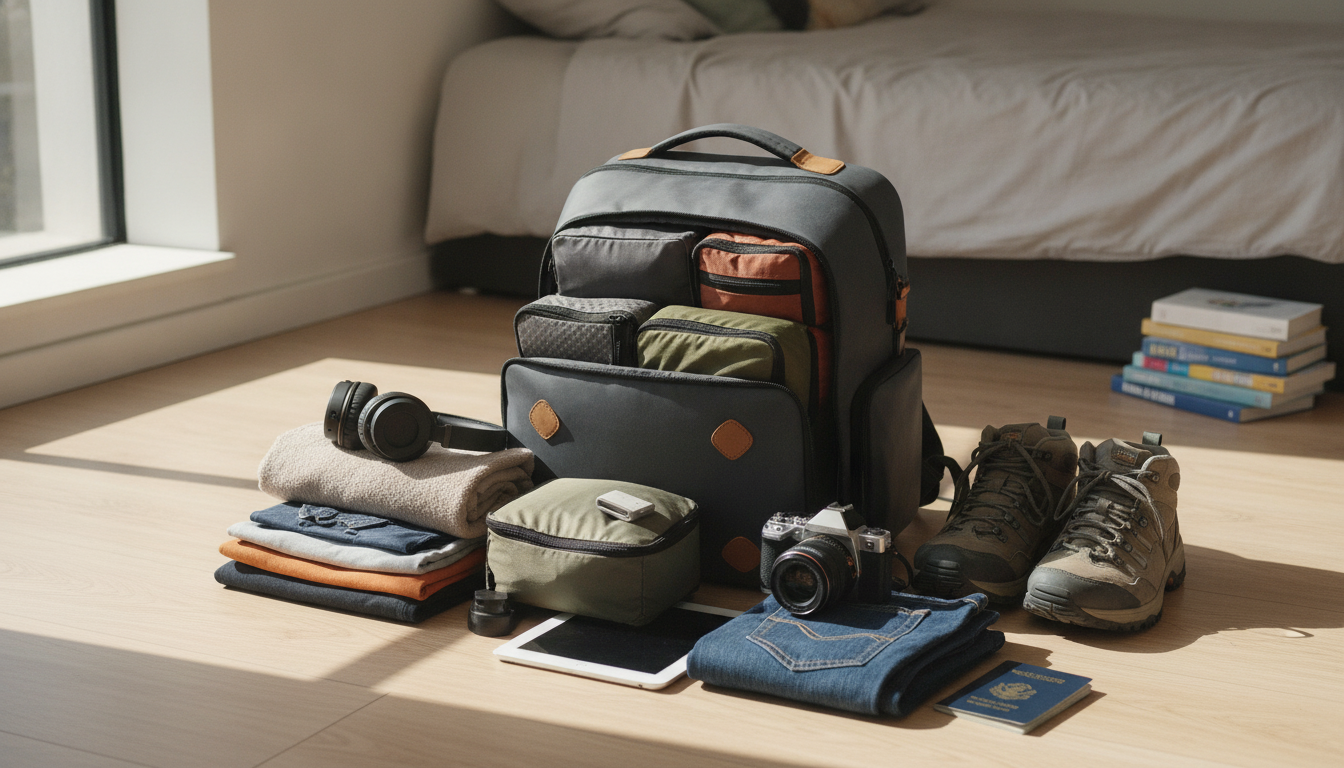
Packing cubes or a compression folder also make a bigger difference than most people expect: less visual clutter, faster hotel repacking, and fewer loose items to juggle when you move cities or switch rooms.
Build a 7-day capsule: fewer items, more outfits
A 7-day carry-on wardrobe works best as a capsule: a tight color palette (two neutrals plus one accent) so nearly every top can pair with every bottom. This removes decision fatigue and prevents “orphan items” that only match one thing.
A practical target is 3–4 tops, 2 bottoms, 1 midlayer, 1 outer layer, and 1 “nice” option that can dress up or down. Prioritize quick-dry, wrinkle-resistant fabrics so a small sink-laundry reset is realistic, not annoying. A useful filter is the rule of three: each piece should work in at least three outfits, including your travel-day outfit.
| Category | Quantity | Notes |
|---|---|---|
| Tops | 3–4 | Mix of casual + one smarter top |
| Bottoms | 2 | One everyday + one versatile/dressier |
| Midlayer | 1 | Light sweater, fleece, or overshirt |
| Outer layer | 1 | Packable rain jacket or light coat |
| Underwear | 7 | Or 4–5 if doing laundry |
| Socks | 4–7 | Depends on footwear and activities |
| Sleepwear | 1 | Doubles as lounge wear if possible |
| Shoes (packed) | 0–1 pair | Wear the bulkiest pair in transit |
| Accessories | 1–3 | Belt, scarf, hat depending on climate |
A simple packing checklist that prevents last-minute stress
Use a checklist that’s short enough to finish, but complete enough to keep you from scrambling at midnight. Start with documents: ID/passport, boarding details, insurance info, and a backup copy stored securely. For international plans, it also helps to review the U.S. Department of State international travel guidance for entry requirements and country-specific updates.
Next, health essentials: prescriptions in original containers, basic pain relief, bandages, and any must-have personal care items you can’t easily replace on arrival. Then tech: phone, charger, power bank, earbuds, and one universal adapter if needed.
Finally, comfort items that smooth over delays: an empty reusable water bottle for security, sunglasses, and a small snack. To keep your wardrobe resilient, plan a “buffer outfit” strategy—pick pieces that can handle a spill, a surprise dinner, or a temperature swing without forcing a full repack.
Toiletries and liquids: stay within the rules and skip the mess
Liquids, gels, and aerosols need to be managed early, not at the end. Keep everything in travel-size containers and group them in one clear, sealable bag for quick screening. For U.S. departures, the TSA liquids rule is the simplest reference for what typically passes through security.
Pack by zones so everything stays easy to find
Zone 1: Top access (quick-grab)
Zone 2: Core (the capsule)
Zone 3: Base (heavier items)
Personal item: the “first 2–3 hours” kit
Outfit planning for real life: activities, weather, and laundry
Quick mistakes to avoid (and what to do instead)
Make it even easier with a step-by-step packing guide
For a done-for-you plan with checklists and a clear sequence, use One Bag, One Week, Zero Stress | Ultimate Travel Packing Guide for How to Pack a Carry On Bag for a Week as a packing companion.
If travel days tend to trigger nausea in cars, buses, or turbulence, No-Nausea Ride: The Ultimate Digital Guide to Beating Motion Sickness on the Road can help you build a simple prevention plan before you leave.
FAQ
How many outfits fit in a carry-on for a week?
Most travelers can cover 7 days with about 6–10 outfit combinations by packing 3–4 tops, 2 bottoms, and a layering piece. Re-wearing bottoms and doing one quick midweek laundry reset for underwear/socks keeps the total item count low without feeling repetitive.
What toiletries can go in a carry-on?
Most toiletries are allowed, but liquids, gels, and aerosols must follow size and screening rules, typically packed together in a clear, sealable bag. Travel containers and solid alternatives (shampoo bars, solid deodorant, toothpaste tablets) make it easier to stay compliant—always check current airport/airline and destination rules.
How do packing cubes help for a one-bag trip?
Packing cubes support “zone packing” by keeping categories separate, which speeds up hotel repacking and helps you find items without emptying your bag. They also make it easier to separate clean and dirty clothes and keep your carry-on tidy during security or gate checks.













Leave a comment